Interest rates are influenced by both public and private savings demands, with recent trends revealing closer ties between government debt and corporate bonds.
The Dynamics of Interest Rate Determination
The determination of real interest rates hinges on the interplay between savings, both private and public, and the demand for money versus bonds. This relationship is crucial for understanding broader economic health. Factors such as monetary policy, inflation expectations, and economic growth trajectories all come into play, not only affecting individual households but impacting corporate investment strategies as well. The role of government deficits cannot be understated; when these deficits expand, they generally imply increased borrowing needs, which could push interest rates higher as the supply of capital becomes constrained.
In my upcoming classes, I plan to tackle this complex relationship, particularly focusing on portfolio crowding out prompted by government budget deficits. Many students initially find these dynamics abstract, but real-world examples can make the material more relatable. For instance, when government borrowing spikes, it can diminish the funds available for private investment—this is the crux of crowding out. Understanding this can empower students to analyze future policy decisions critically.
Teaching Portfolio Crowding Out
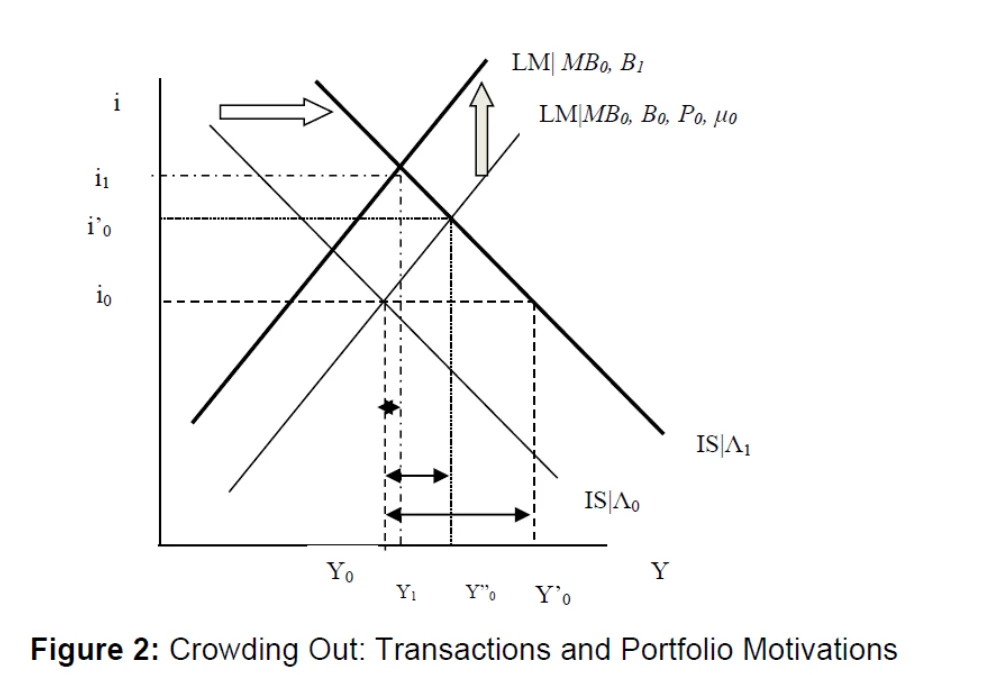
I often illustrate the impact of budget deficits through illustrative models, specifically using the IS-LM framework. This framework enables us to visualize the relationship between the goods market (Investment-Savings) and the money market (Liquidity preference-Money supply). When governmental deficits increase, they typically shift the IS curve, leading to a higher equilibrium interest rate. The following graph highlights the concept of crowding out:
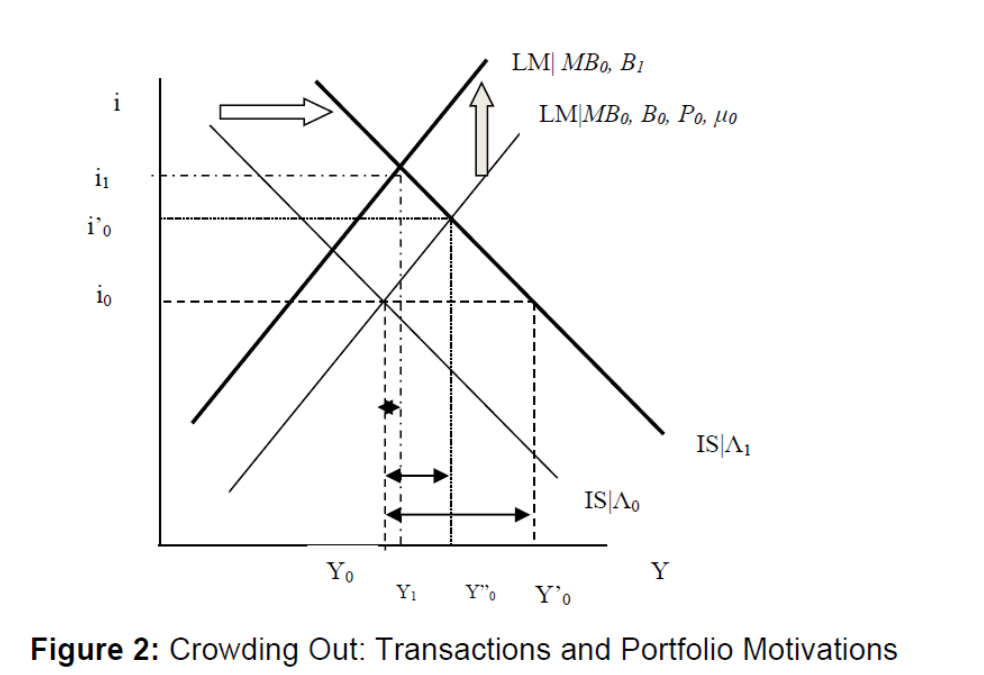
As we assess this framework, important questions arise: How do investors react to changes in government borrowing? It’s not uncommon for market participants to adjust their portfolios in response, choosing to invest more heavily in safer assets during periods of uncertainty. This behavior can amplify the effects of crowding out, leading to potentially prolonged periods of low private investment despite robust government spending.
Insights from Loanable Funds Theory
Conversely, the loanable funds framework shows an uptick in savings demand attributed to budget deficits. This theory posits that when the government increases its borrowing, the demand for loanable funds rises, which can lead to higher interest rates depending on the elasticity of supply. Here's how that scenario plays out:
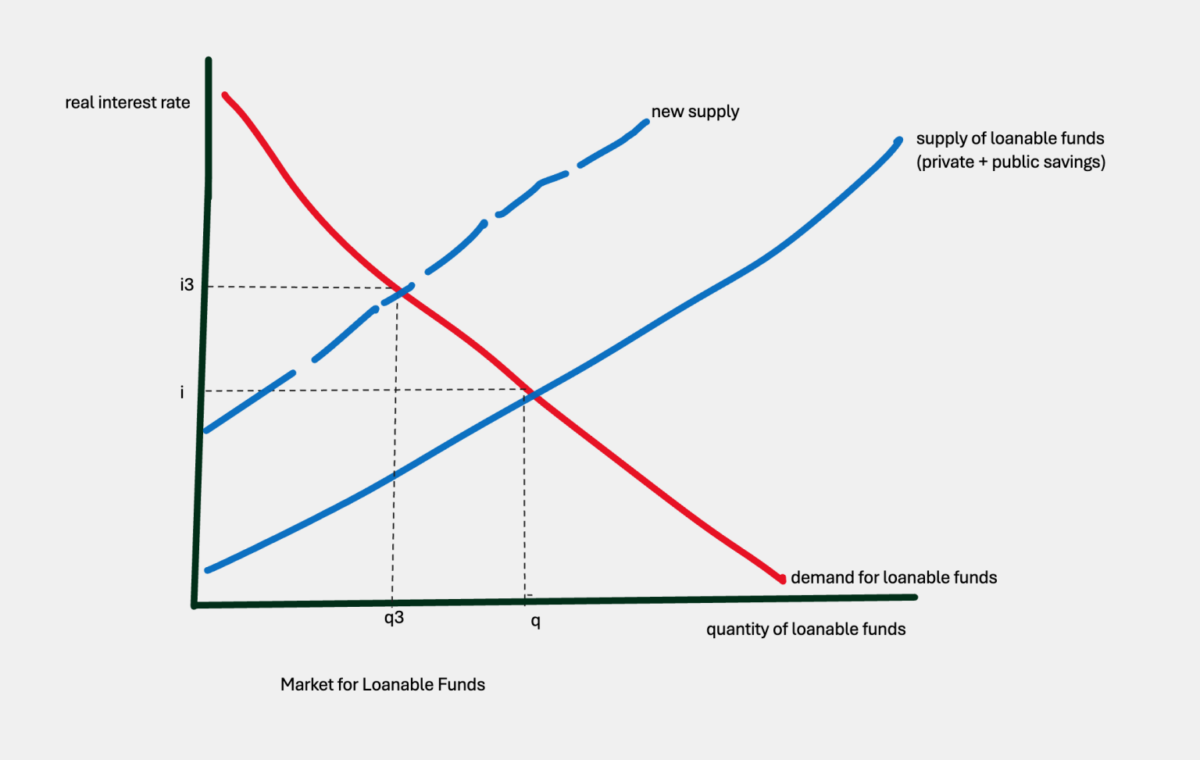
In real terms, if government budgets are in deficit, it often prompts the private sector to ramp up its savings to meet the demand for credit. This is an important dynamic that highlights how interconnected various economic sectors truly are. If you're working in this space, you might notice that borrowers react to shifting interest rates not just through their immediate financing conditions but also through broader economic expectations—such as anticipated inflation or growth—thus introducing additional layers of complexity.
Evaluating Effectiveness of Theories
Both frameworks predict rising interest rates, yet the accuracy of each theory remains debatable. Critics often point to the varying contexts in which these theories apply; they can yield inconsistent predictions based on real-world conditions. A focus solely on outside assets, aligning with a non-Ricardian perspective, suggests that portfolio considerations might more directly influence government debt interest rates. This is an area ripe for exploration, as the investment choices made by large institutional investors can dramatically sway interest rates, echoing that sentiment of uncertainty among investors that can influence the marketplace.
Ultimately, how we interpret these theories shapes not only academic understanding but also policy implementations. A singular focus on interest rates might overlook the nuanced impacts of such theories on long-term economic growth.
The Changing Market of Credit Demand
Recent reports indicate that corporate demand for credit, especially from companies investing in AI, is reshaping the market. As companies increasingly seek capital to fund technological advancements, the implications stretch across industries. Economist Hanno Lustig highlights that US government debt is increasingly viewed as “riskier,” leading to a scenario where it and high-quality corporate bonds function as closer substitutes. This transformation in investment strategies moves investors toward a more risk-aware stance, steering some away from traditional government securities. The following spread analysis supports this notion:
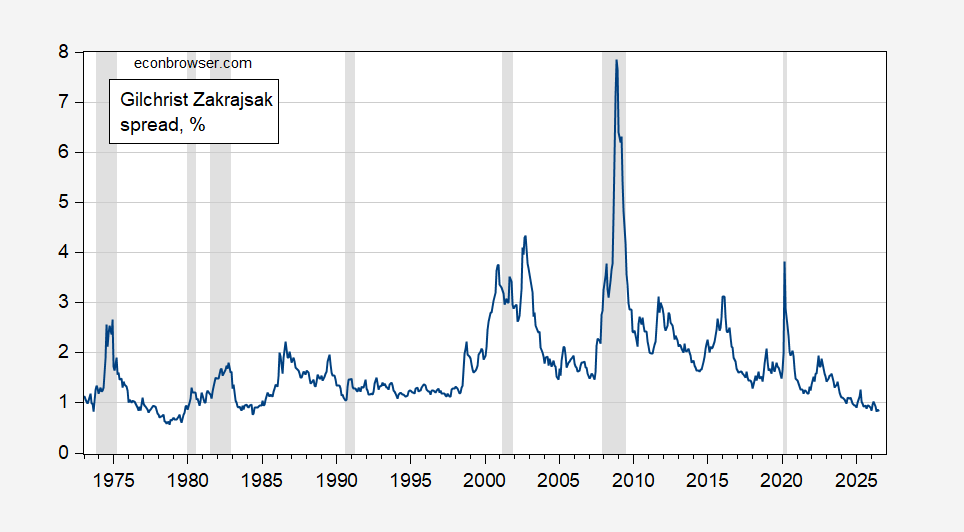
Figure 1: Gilchrist Zakrajsak spread, % (blue). Source: FRB.
As these trends unfold, it underscores the importance of monitoring credit markets closely. The demand dynamics are changing rapidly—and this is the part most people overlook. Many investors may remain rooted in traditional categories without acknowledging the speed and scale of these shifts. Understanding where corporate investments are targeted can yield valuable insights into future credit trends and economic forecasts.
Implications and Future Outlook
The current low spread suggests a diminished credit risk between US Treasuries and corporate bonds, reflecting a significant shift in market perceptions. Investors are recalibrating their risk assessments, which could influence the tenor and composition of debt within the economy. The outlook for government debt could be less sanguine than in the past; investors may prefer higher yields from corporate bonds if the perception of risk continues to evolve.
Consequently, governments might face challenges in attracting buyers for their bonds, particularly if competing investment opportunities become more appealing. Policymakers need to stay ahead of these dynamics, understanding that shifts in credit demand can have far-reaching implications for fiscal policy and economic growth. The future isn't set in stone, but vigilance is key; financial actors will have to continuously analyze how these evolving interests affect both the market and the economy as a whole.
Discussion
Sign in to join the discussion.