Diesel has dropped about 15 cents in a week, while Iran's continued oil flows and sanctions gaps shape the outlook for crude and refined fuels.
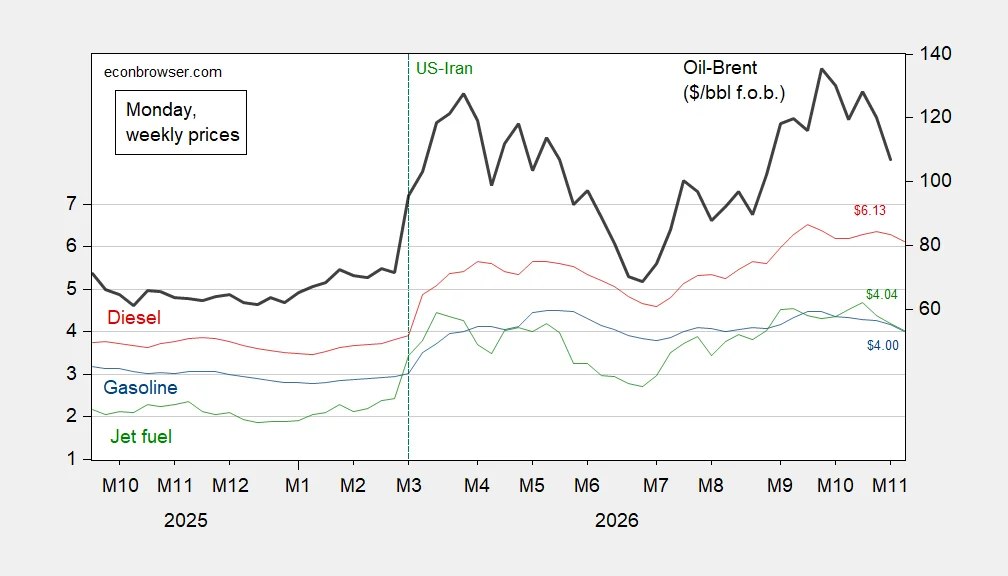
Diesel is about 15 cents a gallon cheaper than it was a week ago, and that's the number worth watching. Pump prices for diesel tend to show up in freight and farm costs quickly, so a move that size matters more than it looks on a daily chart. (And this is the part most people overlook: a drop at the pump is only the visible end of a chain that runs through wholesale contracts, trucking surcharges, and eventually the price of goods that were hauled across the country.)
Why diesel matters more than gasoline
Gasoline gets the headlines because most drivers fill up with it. Diesel rarely gets the same attention, but it moves the things that keep the economy running. Trucks, rail locomotives, farm equipment, and a lot of backup generation all burn it. When diesel gets more expensive, costs ripple through transport budgets and into what businesses charge customers, often with a lag. So a 15-cent drop isn't just a break for commuters. It's a signal about what companies will be paying next month.
Reading the fuel and crude series together
The EIA data, pulled through FRED, puts regular gasoline, diesel and jet fuel on a dollars-per-gallon basis, with Brent crude plotted in dollars per barrel on a separate log scale. Keeping the products on the left axis and Brent on the right makes the spreads between them easier to track than a single-axis view would. My read is that the diesel decline is the signal to watch. Gasoline and jet fuel are moving on their own timelines, and the gap between refined product prices and crude is where the next surprise usually shows up. Mixing units on one axis is a common mistake, and it hides exactly the relationships you care about. Log scaling helps when series move by very different proportions, though it also makes small moves look flatter than a reader used to linear charts would expect.
Spreads are where the story lives. When crude holds steady but products fall, refiners and distributors capture the difference, and that's a different market than one where both fall together. That's the part I'd check first. A diesel-only move tells you something about refining capacity, inventories, or regional demand, not just about the barrel itself.
Iranian barrels and the sanctions problem
The United States has struggled to build a coalition for its campaign against Iran, and that's now complicating sanction efforts, according to New York Times reporting. None of this is brand new. Iran has had off-and-on success moving oil throughout the conflict. What's changed is the negotiating backdrop, and the market reads that backdrop differently than a headline does.
Here's the thing: every barrel that keeps reaching buyers is supply the market doesn't have to replace from elsewhere. That helps explain why crude has been more resilient than the rhetoric around the conflict might suggest. Coalition gaps also make enforcement harder to sustain, and that cuts both ways for traders who are pricing in how long those flows last.
Enforcement regimes of this type typically depend on partners acting in step. When they don't, the gaps tend to get filled by workarounds, longer shipping routes, and intermediaries who are harder to track. That's not a reason to assume sanctions have failed. It's a reason to be skeptical of any claim that they're working cleanly.
I'd be cautious about reading too much into the resilience. Markets price what they expect, not what they've already seen, and a sanctions picture that looks loose today can tighten quickly if the political mood shifts. Nothing in the reporting says which way that goes, and I won't pretend to know.
What the data doesn't yet tell us
And yet, the picture is still unsettled. The diesel drop is real, but one week of data doesn't establish a trend. Watch whether the 15-cent decline holds through the next few weeks of EIA releases, and whether Brent's movement follows the product prices down or stays elevated. That divergence would tell you more about the supply side than any single headline.
A single week is noise until it isn't. Weekly retail numbers wobble for reasons that have little to do with supply, including local price competition and station margins. You'll want several consecutive readings before calling it a turn. That said, a sustained decline paired with flat crude would be harder to dismiss.
Stay skeptical of anyone who calls the direction obvious. The easy story is that falling diesel means easing supply pressure. The harder story is that retailers are catching up to earlier wholesale moves, which would make the decline a lagging echo rather than a fresh signal. Both readings fit one week of numbers. Interesting, but hardly conclusive.
Implications and what comes next
If the diesel decline holds, the first beneficiaries are businesses that buy fuel by the truckload. Freight operators, farm operations, and anyone running heavy equipment would feel the relief first, and it would show up in their margins before it reached consumer prices. That's the practical significance here, and it's easy to underweight.
If you're working in this space, the useful habit is to track the product-crude spread alongside the headline price. If you're a buyer, a reporter, or an analyst, you'll want to know whether the sanctions story is moving the physical market or just the commentary around it. Those are different questions with different answers, and mixing them up is how bad conclusions get made.
This is more significant than it looks on a single chart, but less settled than the early reactions suggest. The next few weeks of data will do more to resolve the argument than any amount of commentary, including this piece. Treat the diesel move as a question to test, not a conclusion to lean on.
Discussion
Sign in to join the discussion.