SEFE is dismantling the idle Greifswald plant at the Nord Stream landfall for transfer to Ukraine, with completion set for Q1 2027 after no viable sale emerged.
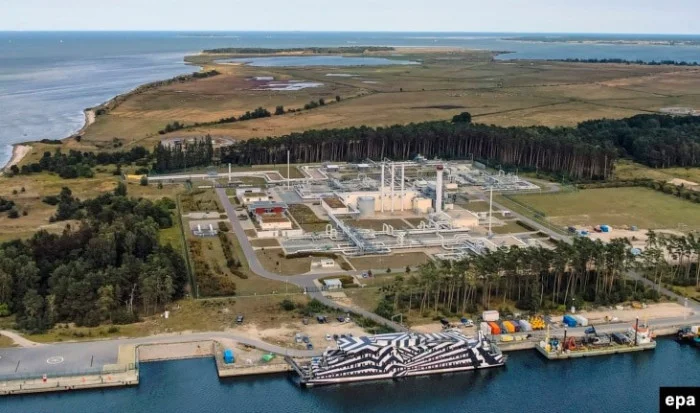
The idle Greifswald power plant at the Nord Stream landfall in Lubmin is coming apart, and its components are headed to Ukraine. For anyone tracking stranded energy assets, the decision matters less for the steel than for what it reveals about how buyers and governments now price Russian-linked infrastructure.
Dismantling is already underway
Securing Energy for Europe (SEFE), the state-owned company that majority-owns the plant, confirmed the work to RFE/RL. Spokesperson Adrianne Montgobert said dismantling is under way, managed by a team from Naftogaz, Ukraine's oil and gas giant. The transfer should wrap up in "the first quarter" of 2027.
The plant's job was tied directly to the pipelines. It heated gas arriving through Nord Stream 1 and fed electricity into Germany's grid. The Nord Stream lines run under the Baltic Sea from Russia to Germany and no longer operate, and the plant stopped in April 2023. Its economic logic disappeared with the gas flow.
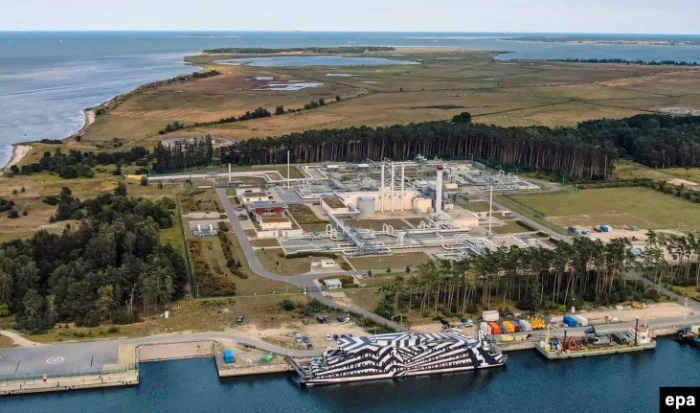
A September 2022 file photo of the Greifswald industrial power plant, beside the German landfall of the Nord Stream gas pipelines from Russia. The facility heated gas arriving through Nord Stream 1 and supplied electricity to Germany's power grid.
Why no buyer came forward
SEFE says it looked at every reuse and sale route, including actual sales talks. "No commercially viable solution emerged," Montgobert wrote in an e-mail. Donation was, in her words, "the best alternative to scrapping it." That's a telling admission. A plant with a working turbine hall and grid connections still couldn't attract a buyer once its gas supply vanished, which says more about the economics of the pipeline than about the hardware.
A handover with a political edge
The transfer hasn't been free of friction. In May, the Alternative for Germany (AfD) pushed an motion to halt the handover, arguing the removal would "impair future energy policy options." It failed. The party has backed ending military aid to Ukraine and lifting sanctions on Russia, so the vote reads as part of a larger argument over Ukraine policy.
Local business voices have also weighed in. Gerold Juergens, president of the Western Pomerania Business Association, told a German media outlet, "many people's impression is: First they blow up the pipeline and then they take away the power plant. You can't explain that to anyone." The remark is a reference to the sabotage allegations, and the context matters here. A Ukrainian special forces officer is on trial in Hamburg, accused of leading a team that sabotaged the pipelines. Kyiv denies any involvement in the September 2022 explosions that ruptured three of the four undersea lines.
Montgobert pushed back on the local unease. She said the decision "has been met with understanding" from the workers who ran the plant, and that dismantling has "proceeded smoothly, with no reported concerns from long-time employees or managers."
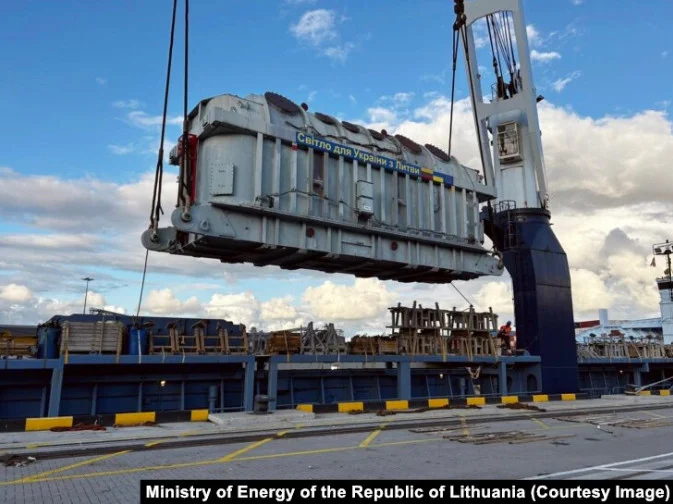
An autotransformer being loaded for shipment from Lithuania to Ukraine in 2023.
Part of a wider EU push
Lubmin is one piece of a broader EU-led effort to move energy hardware, and sometimes whole decommissioned plants, to Ukraine. Ukraine's energy grid has taken repeated Russian strikes in recent weeks, in what looks like a concerted effort to make the coming months of cold and darkness as hard as possible. Every donated component is therefore being sent into a system under direct fire.
Lithuania offered in September to donate hundreds of tons of equipment from the Ignalina Nuclear Power Plant, shut down in 2009. The bigger precedent came in December 2025, when the EU completed the dismantling and relocation of an entire gas-fired plant, the Vilnius Combined Heat and Power Plant. It moved in 149 separate shipments totaling 2,399 tons. Ukraine didn't reassemble it. It's being used for parts at Ukrainian energy facilities, which is a more realistic model for what a plant like Greifswald can offer.
An EU spokesperson put the scale of the aid at more than 4 billion euros ($4.42 billion) in energy security support since Russia's 2022 invasion. The spokesperson said that support "could generate power capable of supporting up to approximately 9.6 million people." Asked how much of the donated infrastructure had been destroyed by Russian missile and drone strikes, the spokesperson declined to say. "We continue to stand firmly with Ukraine, and we are helping Ukrainians get through this winter," the spokesperson added.
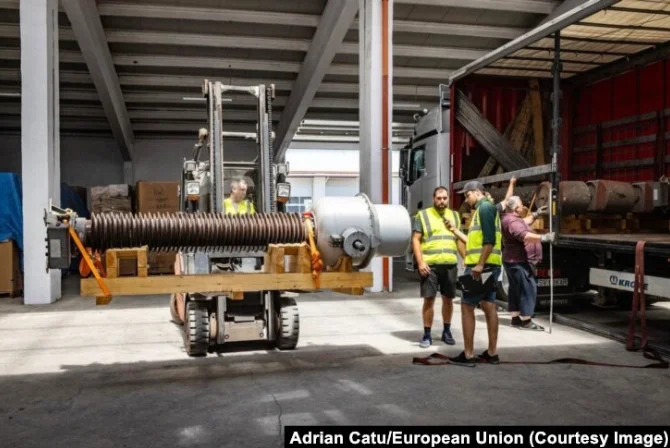
An electrical transformer being prepared for shipment to Ukraine at a warehouse in the EU's Civil Protection Mechanism's logistic hub in Romania in July 2023.
Ukraine's energy ministry, in a July statement, thanked the EU countries involved and said further decommissioned facilities in Latvia, Lithuania, Slovakia, Austria, Croatia, and the Netherlands had been inspected for possible transfers.
What's next in the queue
The next facility in line is the Riga CHP-2 plant in Latvia. A Brussels source told RFE/RL on November 11 that two decommissioned coal-fired plants in Germany are under review for likely transfer. The source wouldn't name them, citing sabotage concerns.
That reticence is the part to watch. Germany has now shown it will move idle energy assets abroad, and the remaining candidates are the ones where the pipeline politics is least settled. Expect the next German handover to draw the same arguments as Lubmin, with the sabotage question hanging over it.
Discussion
Sign in to join the discussion.