Copper prices reached new heights before retreating due to eased market conditions and ongoing global supply tightness.
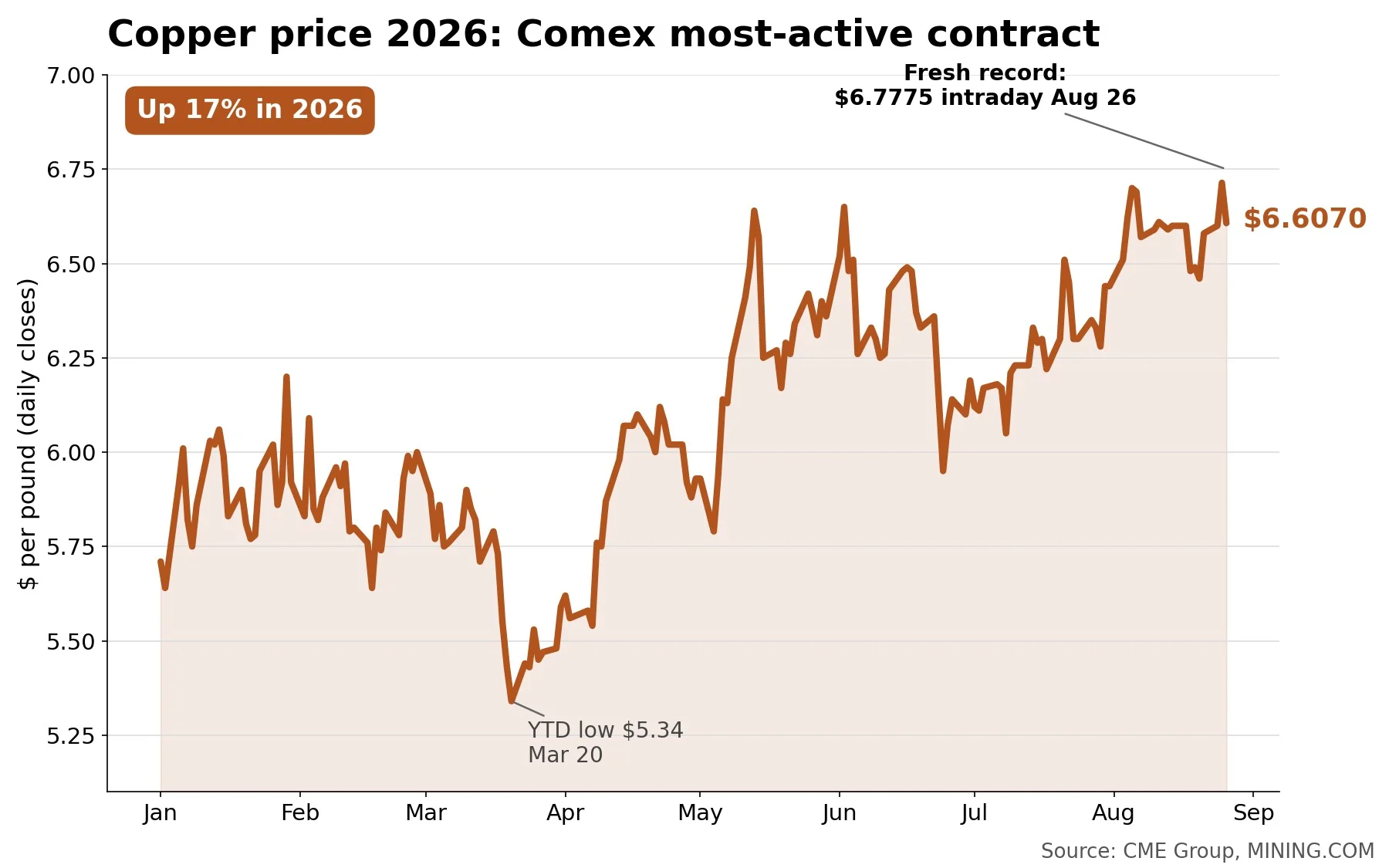
Copper prices surged to new records in New York early Wednesday before reversing course as signals indicated a relaxing supply squeeze in London, prompting traders to take profits. This retreat comes amid existing concerns over global supplies, especially ahead of a key tariff decision from Washington.
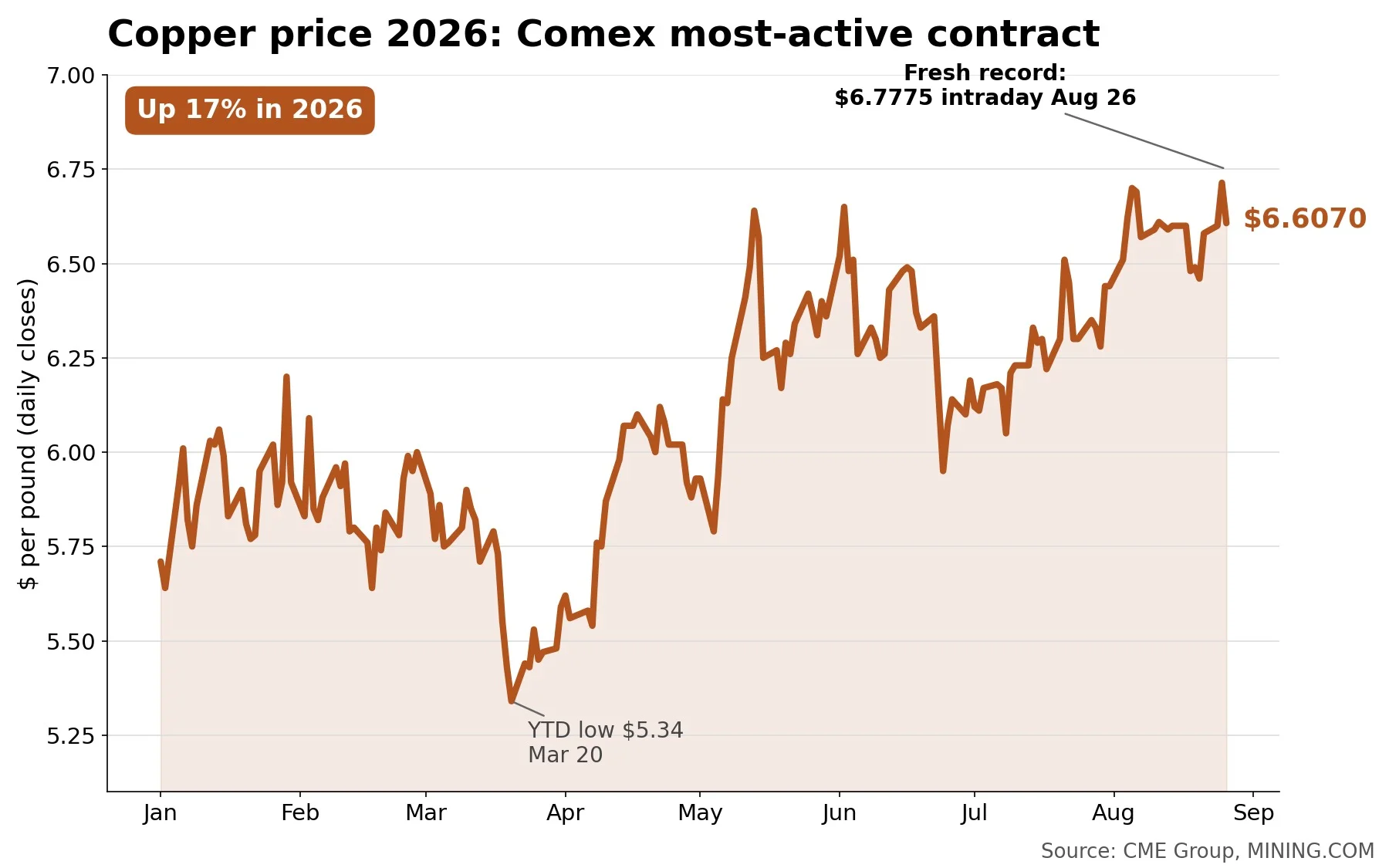
The Comex copper contract for September peaked at $6.7775 per pound (approximately $14,940 per tonne), marking a historic high during early trading. However, it fell by 1.6% to $6.6070 by late morning in New York. Tuesday’s close of $6.7140 already set a record for the contract. As the market fluctuates, traders are grappling with competing signals about supply and demand.
In London, the three-month copper contract was trading at around $14,350 per tonne by early afternoon, showing minimal change following a previous rise of 0.6%. Notably, the highest recorded close prior to this was also last Tuesday, although it still trails behind the all-time intraday peak of $14,527.50 recorded in January. Such pricing dynamics reveal the acute volatility that characterizes the copper market, which can shift rapidly in response to economic and geopolitical factors.
Recent volatility in London Metal Exchange (LME) spreads, where cash copper commanded over $500 a tonne above three-month futures, shows signs of unwinding, now sitting at a gap of $127 as of Tuesday settlements. This narrowing of the spread indicates a potential easing of tight supply conditions, but the underlying fundamental issues remain. Recent trading on the exchange highlights persistent tightness, with the September contract priced about $100 a tonne over October—a marked increase from under $50 at last week’s end, suggesting immediate availability remains limited.
Further complicating matters, more than 50,000 tonnes of withdrawal orders impacted LME warehouses this past Monday, while the Shanghai Futures Exchange is witnessing a decline in on-warrant stocks for the sixth consecutive day. This persistent reduction in stockpiles can signal heightened demand or unforeseen disruptions in supply. In stark contrast, Comex inventories are at a historic high, exceeding 675,000 tonnes after a steady accumulation over 46 days. Market participants are closely awaiting the White House ruling on copper tariffs, which is now nearly two months overdue. This impending decision could significantly affect market dynamics, altering trade flows and price trajectories.
Market Fundamentals Driving Prices
The copper mining sector has been unstable, resulting in a significant production loss of around 338,000 tonnes in the first half of the year due to setbacks in regions like Indonesia, the Democratic Republic of Congo, and Chile, according to consultancy firm Project Blue. These production woes underscore the fragility of global copper supply chains amid rising demand from various sectors, including renewable energy and electric vehicles.
This supply crunch isn't just a minor hiccup; it's altering long-term forecasts. As a result, the CRU consultancy has adjusted its global surplus forecast for 2026, now considering it as potentially balanced rather than surplus. Similarly, principal copper analyst Robert Edwards suggests that if imports continue apace, the market could shift towards actual deficits. This shift from surplus to potential deficits indicates how sensitive the copper market is to changes in both global demand and supply stability.
Meanwhile, Macquarie strategist Alice Fox indicated that the Comex inventory surplus may take "years" to deplete. This reality raises questions about the timeliness of any return to price stability. Bank of China International’s Amelia Fu anticipates new highs in copper prices soon, fueled by underlying demand trends and production challenges. She pointed out, “Copper prices remain supported by fundamental factors," noting a support level of 106,000 yuan ($15,770) per tonne on the Shanghai Futures Exchange, where prices hover around 109,000 yuan. If you're working in this space, these insights could signal both risk and opportunity.
Equity Market Developments
In the equity markets, copper-related stocks faced a slight decline following a remarkable week. Southern Copper experienced a drop of 2.5% by late morning trading in New York, while Freeport-McMoRan and Teck Resources also ticked lower. This dip reflects the volatility in the underlying commodities market, where even slight changes in copper prices can impact stock valuations significantly. Contrarily, Zijin Mining rebounded by 2.4% in Shanghai, showing the regional disparities in stock performance amid global market fluctuations.
Despite the downturn, Southern Copper maintains a market valuation near $181 billion, keeping it slightly ahead of Rio Tinto, valued at approximately $180 billion—a first for the company among leading global miners, second only to BHP. This shift in market valuation reflects broader trends in the copper mining sector, which is increasingly significant as demand for copper surges with the green energy transition.
As of now, Comex copper prices reflect a 17% gain in 2026, while the LME contract increased by 15%. This upward trajectory indicates potential continued interest from investors, but it’s essential to consider market fundamentals and geopolitical climate. A price correction could be on the horizon, driven by changing supply dynamics or external macroeconomic pressures. And yet, the long-term outlook remains buoyed by fundamental demand drivers.
Implications and Future Outlook
The current state of the copper market illustrates a high degree of interconnection between global supply chains, geopolitical factors, and investment sentiment. Traders and market watchers should be prepared for continued volatility as we approach pivotal regulatory announcements in Washington. Significant tariff decisions could reshape import costs and trade flows, intensifying the pressure on pricing.
As the green energy transition progresses, demand for copper will likely remain strong. Industries using copper in electric vehicle manufacturing and renewable energy systems could spur a prolonged period of heightened prices. If production challenges persist in key mining regions, this pressure on the supply side could lead to more severe price spikes.
(and this is the part most people overlook) The interconnected nature of the global economy means that localized production issues can have wide-reaching implications, affecting everything from international trade agreements to consumer prices. What this means for you: staying informed and agile in your response to these developments is crucial.
(With files from Bloomberg)
Discussion
Sign in to join the discussion.