Silver's August spike to $70 per ounce reflects heightened market demand, while bank forecasts for year-end prices show significant variance.
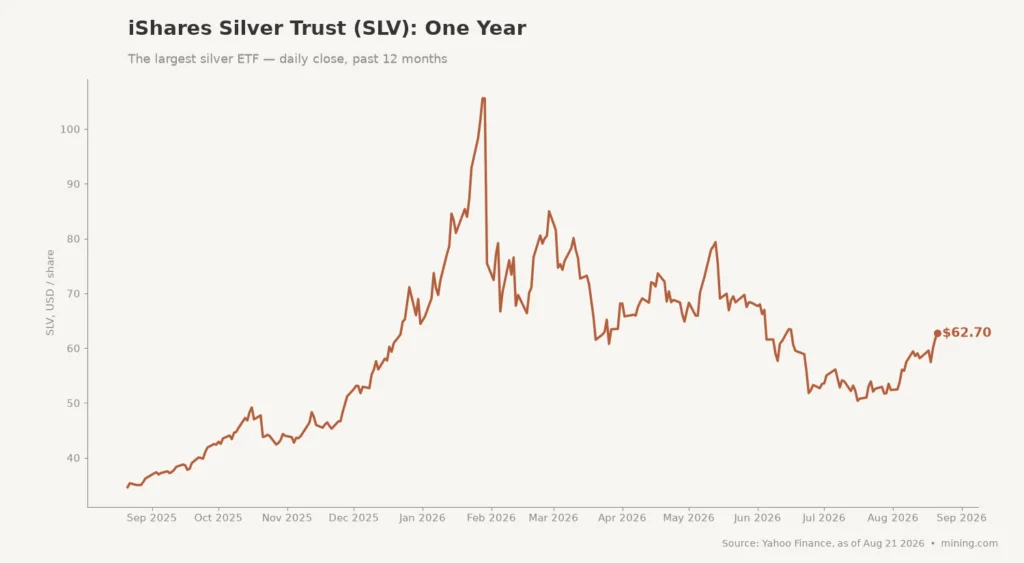
Silver prices surged approximately 20% in August, reaching $70 an ounce on August 21, spurred by the U.S. Treasury’s decision to double its long-bond buybacks, which intensified demand for precious metals. This striking increase came from a starting point of about $57.59 at the end of July, pushing silver's price past multiple banks’ full-year average forecasts while remaining shy of their more optimistic year-end targets.
This increase isn't just a number; it reflects a complex interplay of factors. The U.S. Treasury's actions indicate a commitment to stabilizing the economy, which typically leads to higher demand for safe-haven assets like silver. Investors are often drawn to precious metals during uncertain economic times, making the recent price movements particularly noteworthy.
Silver Equities Response
The response in the silver equities market was even more pronounced, with major producers and exchange-traded funds (ETFs) experiencing substantial gains. The strong appetite for silver has led to a preference among investors for silver companies, significantly amplifying their stock prices as they ride the wave of higher metal prices. It's a testament to the correlation between physical metal prices and the health of mining equities.
As the metal’s price rose, equity investors typically see mining stocks respond with even greater volatility; this phenomenon, often driven by leverage in the mining sector, allows for rapid shifts in investment sentiment. More than just reflecting changes in commodity prices, these movements signal how robust or vulnerable a company is positioned to capitalize on market trends.
Miners Amplify Gains
Leading the pack, Hecla Mining (NYSE: HL) reported a remarkable 47% increase in its stock value throughout August, far outpacing the metal itself. Wheaton Precious Metals (TSX, NYSE: WPM) followed closely with a 44% rise, while Coeur Mining (NYSE: CDE), First Majestic Silver (NYSE: AG), and Fortuna Mining (NYSE: FSM) all posted gains of 42%. Silvercorp Metals (NYSE: SVM) saw a 36% jump.
This performance is more significant than it looks. Mining companies often have fixed costs and high operational leverage, meaning their earnings can swing dramatically with the price of the metal. The fact that these companies are performing so favorably against silver's price increase suggests their fundamentals are relatively strong, or perhaps that investor sentiment is running especially high.
ETFs also reaped the benefits, with the Global X Silver Miners ETF (NYSE Arca: SIL) climbing 35% and the ETFMG Prime Junior Silver Miners ETF (NYSE Arca: SILJ), which targets smaller developers, gaining 32%. Even Pan American Silver (TSX, NYSE: PAAS), although lagging with a 22% increase, outperformed silver’s general advancement, showcasing the leverage effects present in this market.
Such rapid outperformance illustrates how swiftly market dynamics can shift and the inherent risks involved. Investors must consider that the same leverage enhancing returns during price hikes can amplify losses if silver prices pull back. This reality is essential for anyone with exposure to this volatile sector; the adage "high risk, high reward" certainly rings true here.
Diverging Bank Forecasts
Forecasts from major banks reveal a broad spectrum of expectations for silver's year-end pricing, indicating considerable uncertainty regarding its potential trajectory following the recent rally. Expectations range from $67 to $118 per ounce, with various institutions contemplating the possibility of triple-digit prices. This division not only speaks to different analytical frameworks but also highlights the fluid nature of precious metal markets.
UBS's target stands at $80, while J.P. Morgan anticipates $85 as a peak but also cautions of a downside risk to as low as $50. Goldman Sachs is more optimistic, projecting a yearly average between $85 and $100. In contrast, Citigroup maintains a significantly bullish outlook, aiming for $110 in the second half of the year, with a medium-term range of $110 to $150.
On the conservative side, ING and HSBC predict fourth-quarter prices of $74 and $75 respectively, whereas Commerzbank has a $67 target but remains optimistic long-term with a forecast of $90. Bank of America posits a full-year average of $85.93, suggesting that silver could surpass $100 in Q4 under specific conditions.
This varying range of forecasts reflects how dramatically silver's price shift in August has altered market perspectives. At its current level of $70, silver has surpassed some banks' earlier predictions, creating a crowded field of expectations as the price dynamics unfold. Analysts will need to consider both macroeconomic indicators and sector-specific challenges when making new forecasts.
Implications and Future Outlook
What this means for you as an investor is complex. While the surge in silver prices and equities may seem attractive, it’s essential to approach this with caution. The volatility depicted by some of the bank forecasts signals that the market could remain unpredictable in the coming months. Should macroeconomic fundamentals shift—think inflation rates, interest rates, or geopolitical tensions—the rush into silver could either solidify or evaporate faster than you can blink.
And yet, there's a palpable undercurrent of excitement about where silver prices might go. If central bank strategies continue to favor low interest rates, silver may remain an appealing trade, especially for those looking to hedge against currency weakness. However, remember this: investor sentiment can change abruptly. This isn't a settled situation; it’s fluid.
In this context, those working in commodities, financial services, or wealth management must stay attuned to both the technical indicators and global news cycles. The implications of this volatility extend beyond individual portfolios; they can affect broader market dynamics, especially if significant players start moving in or out of specific positions.
(And this is the part most people overlook) — the shifts in investor psychology can create cascading effects in related markets, making it essential to keep an eye on correlated assets like gold and mining stocks. So, vigilance is key.
Discussion
Sign in to join the discussion.