Gold prices surged to a three-month high as the U.S. Treasury's bond buyback strategy raises concerns around long-term borrowing costs and debt management.
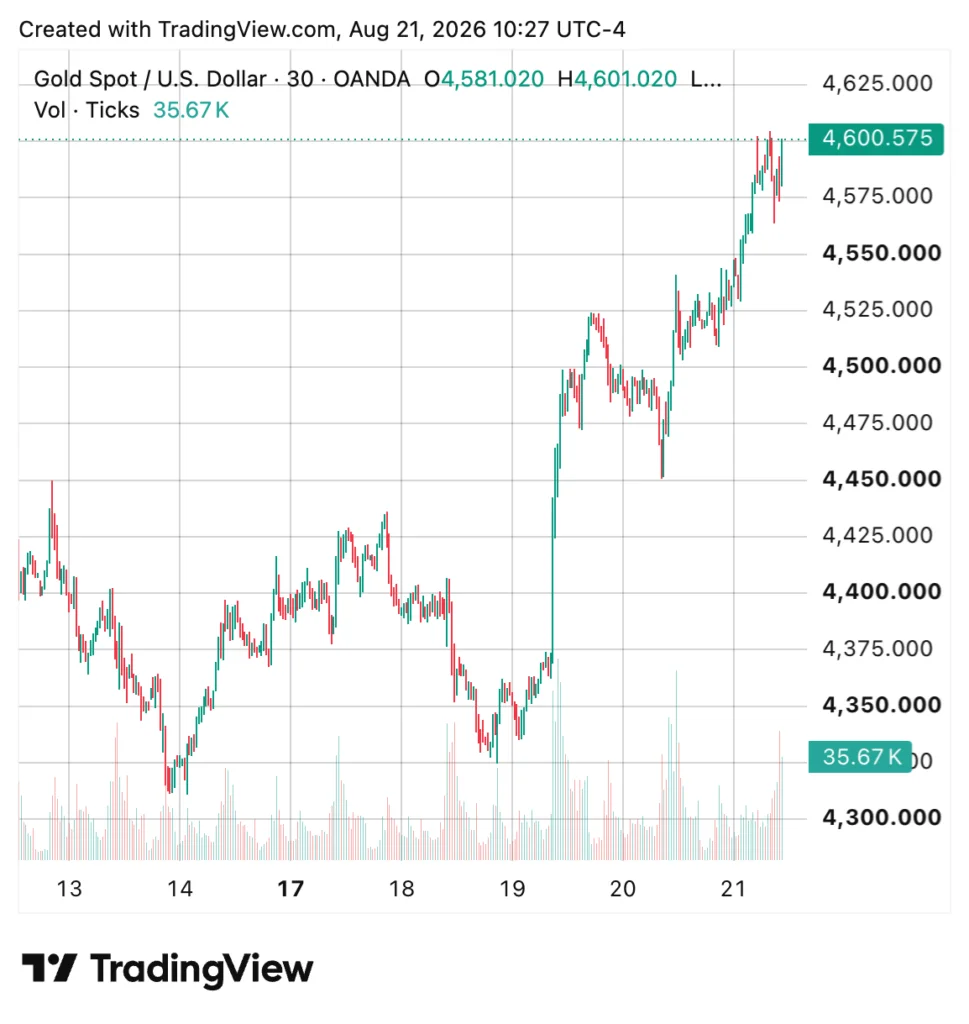
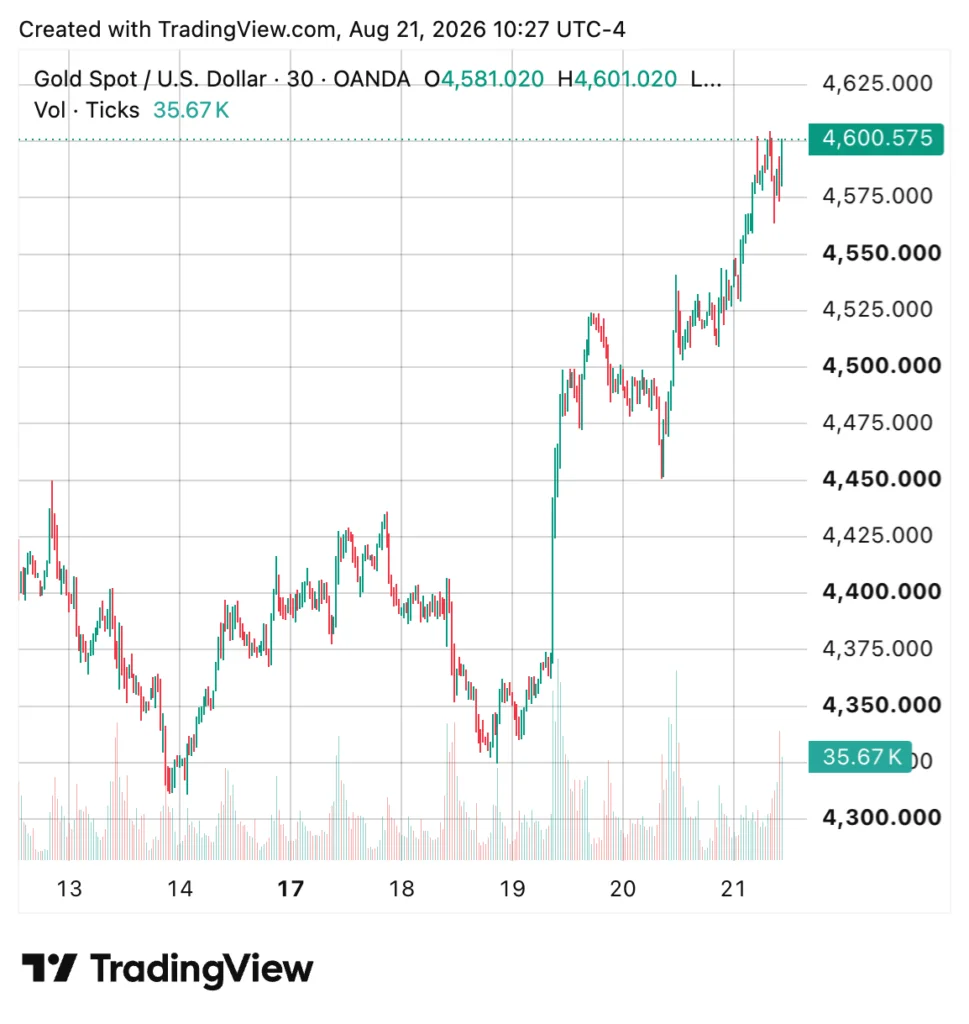
Gold prices have surged to approximately $4,600 per ounce this week, primarily driven by market reactions to recent U.S. Treasury decisions aimed at controlling long-term borrowing costs, according to insights from the World Gold Council.
The climb follows an unexpected expansion in the Treasury's purchases of longer-dated government bonds, which led to a weaker U.S. dollar and heightened investor anxiety over the country's escalating debt, which recently crossed the $40 trillion mark—having doubled in under a decade.
On August 19, the Treasury announced its intent to double its buybacks of longer-dated Treasuries after yields reached their highest point in years. This action immediately contributed to a drop in both bond yields and the dollar while propelling spot gold prices up by more than 3%, marking its largest single-day increase since February. By the end of the week, gold prices had extended their gains above $4,600, continuing a three-week rally.
Cambridge University economist Mohamed El-Erian remarked that while the Treasury’s actions aren't formally classified as yield-curve control (YCC), they represent a potential shift towards such a framework. This nuance was further explored by the World Gold Council in a recent report assessing the implications for bullion investors.
Hedge Fund Dynamics
Market analysts note that banks are increasingly constrained by capital rules, while investments in sectors like artificial intelligence and data centers are competing for limited capital. As a result, a growing portion of Treasury demand is now generated by more price-sensitive investors, including hedge funds, according to Johan Palmberg, senior quantitative analyst at the World Gold Council.
The pressure on traditional Treasury buyers has driven up expectations for compensation on long-dated government debt. Recent increases in Treasury yields indicate that market participants do not believe Washington's growing debt will be easily absorbed. The interplay between supply and demand is increasingly shaping the dynamics of bond prices.
If these pressures persist, there’s a possibility that policymakers could explore yield-curve control, whereby the Federal Reserve would actively buy bonds to directly influence longer-term interest rates. While the current Treasury strategy is framed as a measure to enhance market functionality, there's a risk that the boundaries between policy intentions could blur.
“Just because it walks like a duck and quacks like a duck, doesn’t mean it’s a duck,” Palmberg commented, highlighting the complexities of the situation. “It’s monetary policy’s version of plausible deniability.”
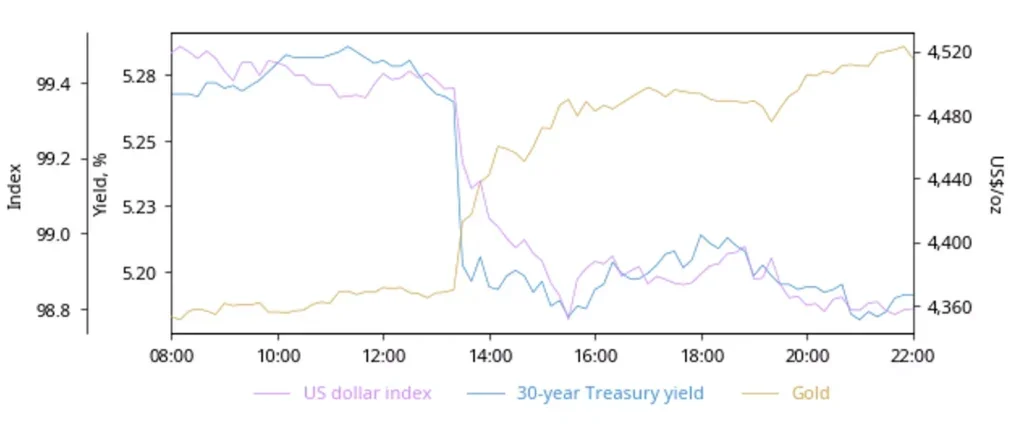
Source: Bloomberg, World Gold Council
Implications for Gold Investors
Palmberg identifies three primary benefits for gold investors should the U.S. enact yield-curve control. First, this policy would likely weaken the U.S. dollar, further transferring the adjustment burden to the currency rather than the bond market.
“The expensive U.S. dollar is already under pressure, and YCC could compel more adjustments through currency dynamics,” he noted. A weaker dollar makes gold less expensive for foreign buyers and typically supports higher bullion prices.
Second, if bond yields are limited while inflation persists, real interest rates would likely decrease. Historical trends indicate that gold performs well when inflation-adjusted yields drop, as the opportunity cost of holding this asset diminishes.
Lastly, investors may start viewing gold as a hedge against what economists describe as financial repression—governments keeping borrowing costs artificially low to manage debt burdens.
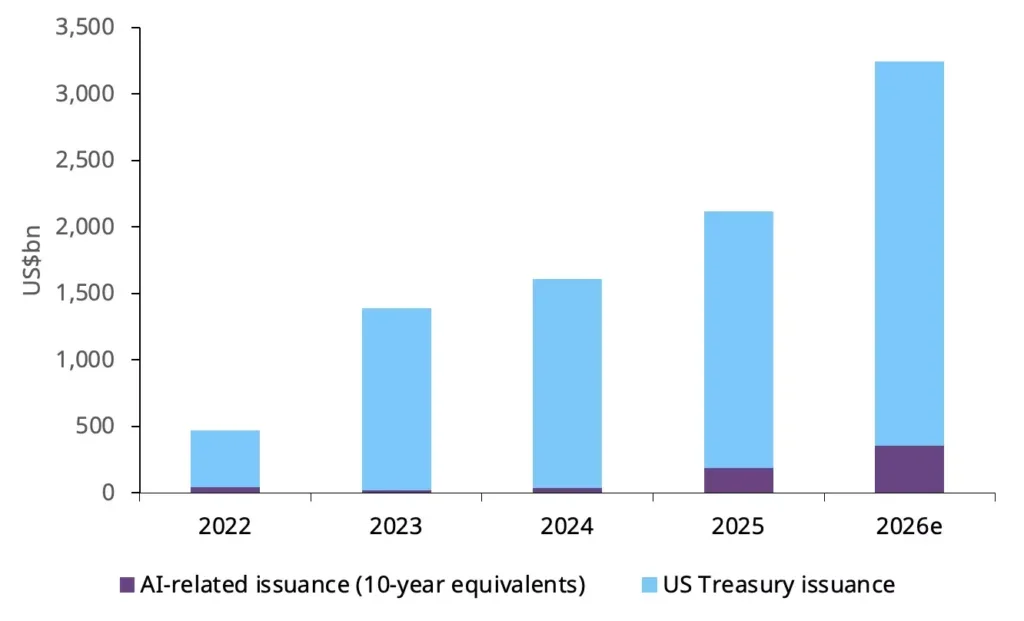
Source: Bloomberg, Dallas Fed, SIFMA, World Gold Council
Market Uncertainty Ahead
One significant concern raised by Palmberg is that a Treasury market influenced by administrative price controls could create uncertainty, leaving investors uncertain about yield levels without such interventions. “Markets can be relentless,” he warned. “It doesn’t require aggressive short-sellers, just an absence of buyers.”
He emphasizes that while these developments hold potential advantages for bullion, they can also lead to a more cautious outlook. A temporary, credible yield-curve control could restore some investor confidence in bond markets and lower risk premiums, potentially decreasing demand for gold despite falling yields.
Historically, sustaining such policies has proven challenging. The U.S. experience during the 1940s faced issues related to spiking inflation and debates surrounding the independence of the Federal Reserve. Nevertheless, Palmberg argues that the underlying investment rationale for gold remains sound.
“The concerns surrounding the debt burden continue to be a pillar of gold demand, and any strategies to manage that debt without addressing its reduction are likely to benefit the gold market,” he concluded.
Discussion
Sign in to join the discussion.