Small home builders are seeing significant increases in material costs, impacting their ability to maintain competitive pricing in the housing market.
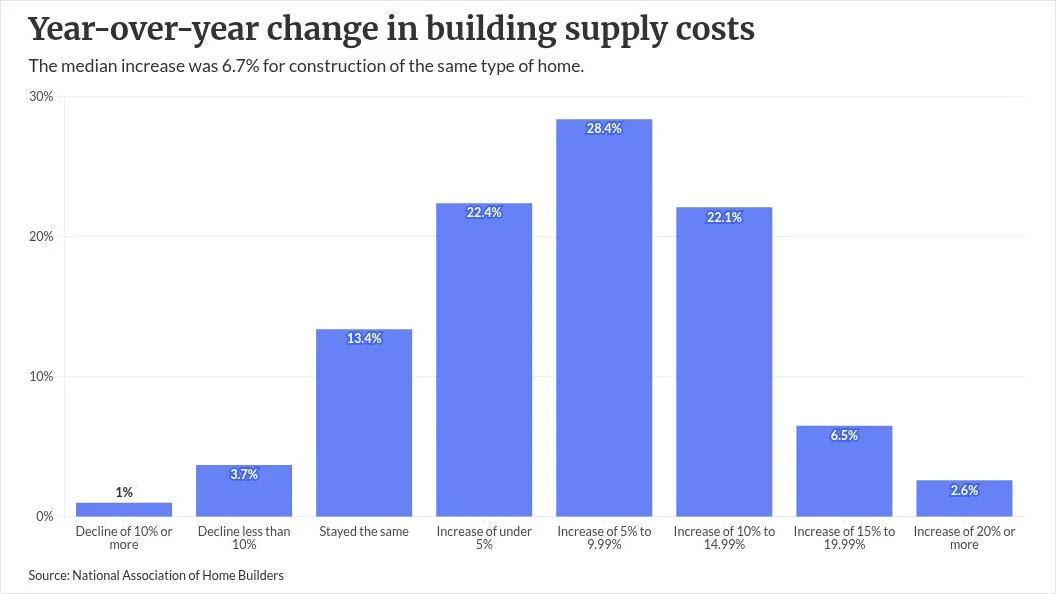
A significant trend in the home construction sector is emerging: small builders are facing sharp increases in material costs this summer, which could jeopardize their future competitiveness in the housing market. Reports indicate that over 80% of homebuilders surveyed noted rising material prices in July compared to the previous year, with a particular emphasis on the struggles of smaller firms that feel these pressures more acutely than their larger counterparts.
Material Cost Increases: A Closer Look
According to data from the National Association of Home Builders (NAHB), the median rise in material costs for builders stood at 6.7% as per their latest survey, aligned with findings from the U.S. Census Bureau's Producer Price Index (PPI). This scenario isn't just about numbers; it shapes the operational landscape for builders and the overall housing sector. Smaller construction firms report escalating costs that correspond closely with their size and volume of projects. Cost spikes can be devastating for small builders, who typically work on thinning profit margins. The material cost surge doesn't occur in isolation; it's coupled with labor shortages and supply chain disruptions, which only compound the challenges these firms face.
In a striking statistic, 72.9% of builders reported that their material costs increased by as much as 15% over the past year, reflecting the intensity of the current economic climate. Paul Emrath, NAHB's vice president for survey and housing policy research, shared insights on the varied impacts felt across the industry. For context, this sharp rise affects not only builders' profit margins but also homebuyers’ affordability. If costs keep climbing, home prices will inevitably follow, impacting buyer sentiment and market activity.
Impact of Builder Size on Cost Variation
The size of the builder is a decisive factor in material cost absorption. Smaller firms, those starting five or fewer homes annually, experienced a concerning median cost ramp-up of 9.1%. In stark contrast, larger builders—those managing over 100 units—reported only a 1.8% increase, signaling a significant disparity. Builders managing six to 24 homes saw a 7.3% cost increase, and those constructing 25 to 99 homes incurred a 4% rise. This variance illustrates why many small builders might find themselves at a competitive disadvantage.
The gulf in experiences across different sizes stems from several factors, including larger builders' ability to stockpile materials and negotiate better terms with suppliers due to established relationships. For instance, larger firms often have dedicated procurement teams that monitor market conditions and act accordingly, allowing them to mitigate risk. "Larger builders may also have long-term contracts that lock in prices, allowing them to buffer against sudden spikes," noted Emrath. That's not just a matter of luck; it's a strategic advantage that smaller builders struggle to replicate.
Current Trends in Material Pricing
The recent NAHB data aligns with the PPI findings for July, which saw construction goods, including essential inputs like fuel and energy, reflecting similar inflation rates. While there were steep increases noted in softwood lumber—up 17.3% year over year and 7.4% from June to July—other materials, such as ready-mix concrete, only saw minor fluctuations, decreasing by 0.4% in July. This rather mixed picture signifies that while some materials are experiencing dramatic price hikes, others are stabilizing or even lowering, creating a complex decision-making landscape for builders.
This market dynamic poses additional risk to small builders who may not have the same buffer against cost fluctuations as larger players. Their flexibility is limited, and these fluctuations could lead to project delays or cancellations, further straining their resources. The construction ecosystem continues to contend with increased material costs, which ultimately places pressure on home prices. If you're working in this space, you're likely acutely aware that these challenges can deter clients from moving forward on new projects, creating a ripple effect throughout the market.
Tariff Implications for Builders
Heightening this situation are recent tariff announcements from the Trump administration targeting Canadian imports, which could influence the supply chain for essential building materials, even as softwood lumber remains excluded from pending tariffs. This uncertainty adds complexity to an already tense situation where new taxes could aggravate existing costs, prompting builders to voice concerns. Tariffs can distort the supply chain, potentially leading to scarcity of materials that small builders often can't afford to stockpile.
The NAHB urged the administration to consider exempting building materials from the tariff agenda, emphasizing the detrimental effects on housing affordability. "Tariffs exacerbate market uncertainty and strain supply chains, leading to increased construction costs," the association remarked, highlighting a key insight as they navigate the turbulent economic landscape. The necessity for affordable housing has been obvious for years, and these legislative measures risk making the situation worse.
Implications for the Future of Home Construction
As the summer progresses, small builders need to strategize on handling these cost pressures, or risk losing their foothold in an increasingly competitive housing market. Failure to adapt could result in a significant reshaping of the market where larger companies dominate. Without effective strategies, small builders may find themselves forced to pass rising costs on to consumers, hitting housing affordability hard. And this is the part most people overlook: the ripple effects on local economies where small builders often play a vital role.
The ongoing pressures from escalating material costs and tariffs underscore an urgent need for policy discussions on promoting small construction firms. If these builders can’t find relief from mounting costs, the broader implications for housing availability and economic stability are concerning. Future strategies could include collaborative purchasing agreements among small builders or increasing pressure on policymakers to address supply chain issues directly. Whatever the approach, stakeholders must remain proactive to avoid further erosion of the construction sector's backbone—small builders.
Discussion
Sign in to join the discussion.