National mortgage delinquency rates fell in July, signaling improved performance, while foreclosure activity experiences mixed trends.
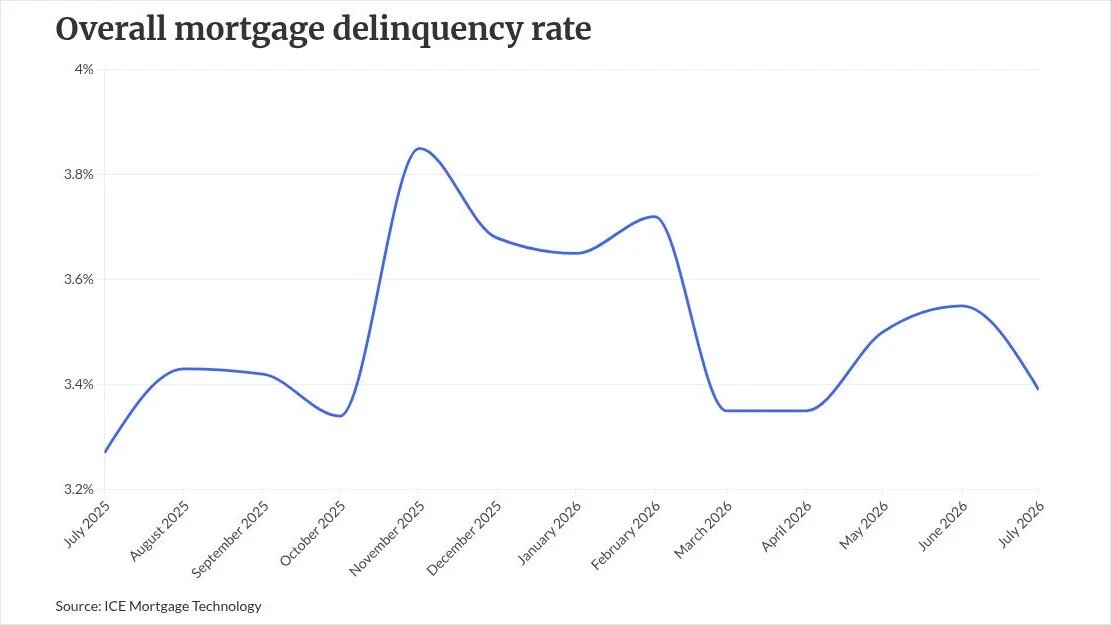
Recent data reveals a notable decline in mortgage delinquencies for July, suggesting an upward trend in housing market performance. The national delinquency rate decreased by 16 basis points, bringing it down to 3.39%, according to the latest report from the Intercontinental Exchange (ICE). While this figure represents a 12 basis point increase from last year, it’s significantly 46 basis points lower than levels recorded in July 2019. This downward movement in delinquencies seems promising, yet it’s essential to look deeper into the numbers and context to understand the broader implications.
Understanding the Decline in Delinquency Rates
Serious delinquencies, defined as loans that are 90 days or more overdue, also reflected improvement, decreasing by 7,000 to a total of 563,000. But this number’s still troubling when placed against a historical backdrop; it marks an increase of 97,000 compared to last year and 87,000 relative to July 2019. In particular, Louisiana reported the highest delinquency rate at 8.2%, with Mississippi noting the highest percentage of loans in serious overdue status at 2.53%. States like Idaho, Montana, and Washington, on the other hand, are faring better, each with delinquency rates below 2.3%. The disparity in regional performance raises questions about local economic conditions and housing supply dynamics that often influence these outcomes.
Andy Walden, head of mortgage and housing market research for ICE, highlighted the significance of July's findings. He stated, "This month's data indicates that mortgage performance may be on more stable ground. Not only did the national delinquency rate and serious delinquency inventory decline, but new defaults have lessened over the past five months, alongside improvement in cure rates." This statement brings forward a critical observation that, while July marks a shift towards positive numbers, systemic challenges remain intact, particularly in high-delinquency states.
Approximately 102,000 individuals fell into the serious delinquency category in July, marking a 4% year-over-year drop. FHA loans were at the forefront of this positive trend, showing a 13% reduction in new defaults from the previous year. This is more significant than it looks; it suggests that specific segments within the mortgage market are stabilizing, likely due to consumer awareness and market adaptation to the existing interest rate environment. Existing homeowners appear to be managing their mortgages more effectively, mitigating the defaults that plagued previous years.
Cures and Challenges
In terms of positive outcomes, cures from serious delinquency rose by 7% to 64,100 in July, marking the strongest month since October 2022. This uptick signals potential financial recovery for many homeowners. Overall, the total number of cures across all stages increased by 12%, totaling 464,000—the highest number since March. What this means for you, the reader, is that while some individuals are indeed catching up on their mortgage payments, the overall housing market remains vulnerable. The improvements in cure rates might suggest a temporary reprieve rather than a sustainable trend in the absence of broader economic stability.
However, despite these encouraging figures regarding delinquencies, the Mortgage Bankers Association observed that the share of mortgages classified as seriously delinquent or in foreclosure rose by 49 basis points from the previous year, reaching 2.1% on an unadjusted basis in the second quarter. This increase was primarily driven by FHA and VA loans, which surged significantly by 227 and 31 basis points, respectively. The specific challenges faced by these loan categories indicate that particular demographics may be under financial strain, suggesting underlying socioeconomic factors must be addressed.
Foreclosures and Prepayment Trends
While delinquencies showed improvement, the active foreclosure inventory is on the rise, climbing by 1.3% month-over-month and 43% year-over-year. Foreclosure sales increased by 8.4% compared to June and are up 14.2% from last year, while foreclosure starts have risen by 23% year-over-year but dipped 8.3% from the previous month. This inconsistency might indicate a developing issue; as some borrowers stabilize, others may slide further into trouble. There’s a stark contrast between those managing to catch up and those likely to fall through the cracks—will this trend continue?
Prepayment speeds have also slowed for a fourth consecutive month. Single-month mortality rates declined by two basis points to 0.74%, the lowest since January. This drop reflects a broader trend attributed to rising mortgage rates, which have remained elevated since March of this year. High mortgage rates tend to disincentivize refinancing, which could lead to a stagnation in market activity and even pressure on home sales down the line. (And this is the part most people overlook.)
Bob Hart, president of mortgage technology at ICE, pointed out the dual nature of the current market: "While we are witnessing encouraging signs in mortgage performance, the ongoing stress in FHA loans coupled with increasing foreclosure inventory emphasizes the need for servicers to maintain visibility over their portfolios." This acknowledgment captures the troubling divide between stabilization efforts for some and deteriorating conditions for others, encouraging a closer observation of individual portfolios. If you’re working in this space, you'll need to keep a keen eye on these trends.
Implications and Future Outlook
The implications of these trends are multi-faceted. While the decline in the general delinquency rates seems positive, their regional variations and the simultaneous increase in foreclosure rates suggest a tipping point. Homeowners in more distressed markets may struggle further, resulting in increased risk for lenders and investors. The dual reality poses challenging questions: What does effective support look like for struggling borrowers? And, how might legislative initiatives pivot in response to these disparities?
Looking ahead, the interplay of interest rates, regional economic conditions, and housing supply will likely dictate the ongoing performance of the mortgage market. Are we heading toward a comprehensive recovery, or is a phase of caution warranted? The next few months will likely reveal more about where the market stands, whether through additional data releases or localized economic shifts that affect housing stability. The market’s trajectory seems uncertain, demanding close scrutiny.
Discussion
Sign in to join the discussion.