Yemen's Houthi conflict disrupts Saudi oil exports, yet global oil prices decline, driven by IEA reports of decreasing demand and rising supply shortfalls.
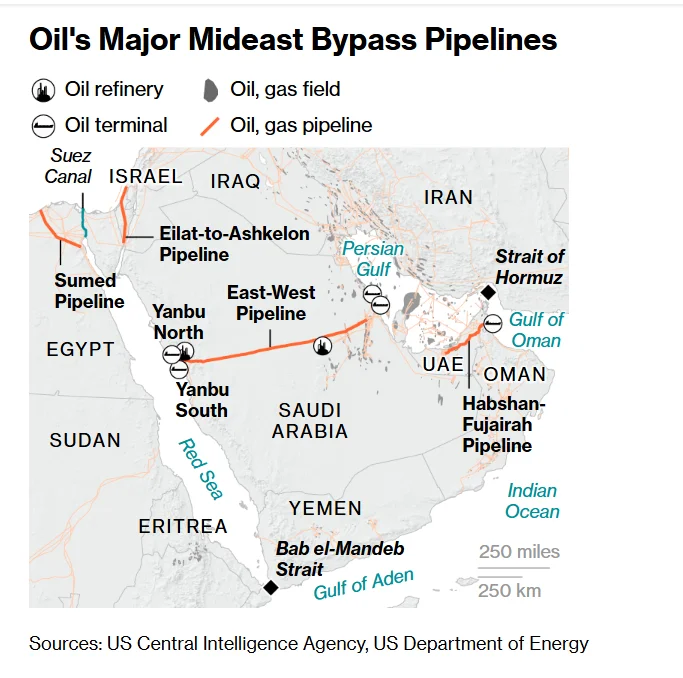
Conflict in Yemen and Its Impact on Oil
The Houthi movement’s expansion of control over the Red Sea region poses new threats to Saudi Arabia's oil exports. This development intensifies existing geopolitical tensions in an area critical for global oil shipments. The Red Sea region serves as a vital conduit, with millions of barrels of oil passing through the Bab el-Mandeb Strait each day, linking the Mediterranean Sea with the Indian Ocean. The strategic significance of this area cannot be overstated; disruptions here could lead to global supply shocks. Surprisingly, as tensions escalate, oil prices have actually decreased.
This might seem counterintuitive given the possibility of conflict impacting oil supply chains. However, it reflects a complex interplay of factors. First, investors are closely monitoring the actual volume of oil being moved and the resilience of supply routes. There's also a perception that production from other major oil-producing countries can cushion any immediate impacts from the Yemen conflict. Yet, this situation warrants caution. The threat to Saudi Arabia's oil infrastructure raises concerns about long-term pricing stability. Escalating hostilities could quickly shift sentiment, leading to panic-driven price surges.
Demand Destruction Insights
Recent assessments from the International Energy Agency (IEA) suggest that demand for oil could see a steep decline. The IEA's insights appear well-grounded, considering broader economic conditions and market sentiments. As reported by Bloomberg, the IEA forecasts that the impact on 2026 oil demand could mirror the four most significant supply shocks of the last 60 years. These historical shocks often accompanied economic downturns, and they shaped the energy landscape for years. Demand destruction isn’t merely a theoretical concept; it happens when prices rise to a point where consumers shift to alternatives or curtail consumption altogether.
Middle distillates, particularly diesel, along with petrochemical feedstocks in Asia, could be disproportionately affected. For example, if Asia’s economies, heavily reliant on diesel for transportation and petrochemical production, experience demand contraction, it could lead to a significant global surplus of crude oil. This isn't just a question of supply and demand; it touches on consumer behavior. If you're working in this space, understanding these dynamics is vital, as they have ripple effects across the entire supply chain.
Supply Shortfall Predictions
The IEA also warns of a more pronounced supply deficiency than previously anticipated, as the war's effects on oil flow overshadow consumption impacts. Supply shortages often exert upward pressure on prices, but contradictory factors—like reduced demand—can lead to instability. Their latest figures indicate an average global oil deficit of approximately 1.7 million barrels per day this year, raising concerns from the earlier estimate of a 1.3 million-barrel shortfall. Such discrepancies in forecasts invite skepticism about the accuracy of energy supply assessments.
Instead of the anticipated increase in stockpiles for the fourth quarter, the agency now expects continued withdrawals, which signals tighter future supply. Why does this matter? Stockpiles are integral to maintaining price stability in times of uncertainty. Withdrawal of reserves implies that market players are bracing for continuing disruptions, which can create volatility. The reality is that markets operate on sentiment as much as on fundamentals, and fear of scarcity can induce irrational behaviors—such as sharp price increases—even when the data suggests a more balanced situation.
Market Outlook
While the situation remains complex, it could offer insights into the current price dynamics in the oil market. At this juncture, the interplay between geopolitical tensions, supply chain stability, and demand fluctuations creates a challenging environment for market participants to navigate. The broader economic implications are significant. A volatile oil market can impact everything from inflation to energy costs for consumers and businesses alike.
This isn't merely about oil; it extends to global economic trends and inflation rates. If prices shoot up without corresponding demand—because consumers scale back their use or switch to alternatives—the market could face prolonged periods of instability. And yet, this also presents an opportunity for investors and policymakers. An environment characterized by this sort of unpredictability can catalyze shifts toward renewable energy sources or more efficient technologies in transportation and manufacturing.
Implications and Future Outlook
The trajectory of the oil market will be shaped by ongoing developments in Yemen and surrounding regions. Increased tensions could provoke more aggressive responses from Saudi Arabia, which might further complicate recovery trajectories for both supply and demand. If these patterns hold, we may observe extended volatility in oil prices, driven not just by local conflicts but also by international reactions.
What this means for you is clear: businesses and investors need to remain agile, adapting to the shifting dynamics of the oil market. Understanding both the geopolitical context and the fundamentals of supply and demand will be essential for making informed decisions. The situation in Yemen is layered, and while current trends might suggest short-term stability, the underlying threats to supply cannot be overlooked. This is more significant than it looks.
Discussion
Sign in to join the discussion.