Core GDP growth has been revised upwards, indicating strong domestic demand, while Q3 growth projections by the Atlanta Fed show a slight decline.
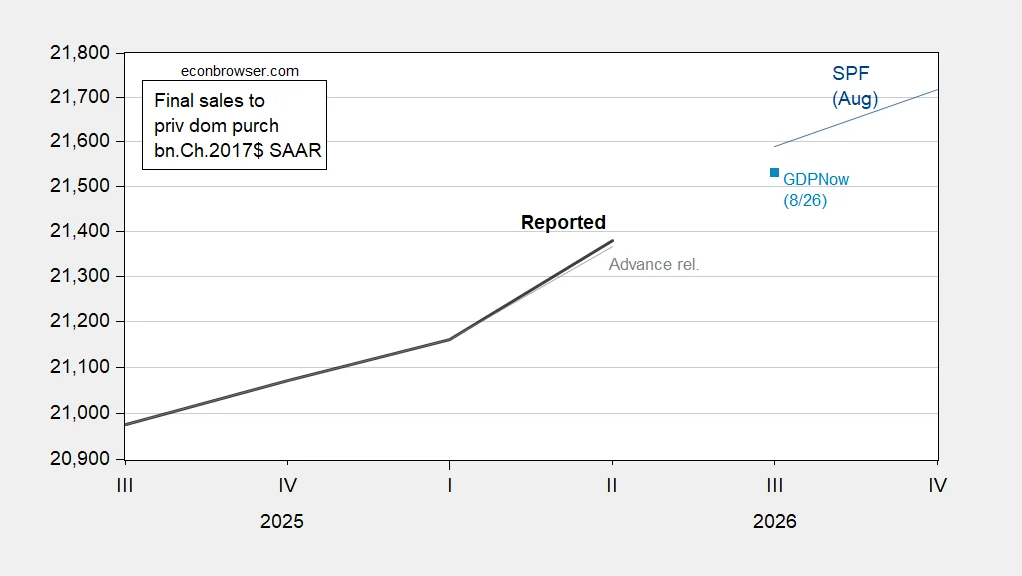
Core GDP Growth Revision
The upward revision of Core GDP from 3.9% to 4.2% underscores a persistent momentum in domestic aggregate demand, despite the headline GDP remaining mostly unchanged. This adjustment signals strengthening fundamentals in consumer and business spending within the economy. Core GDP, essentially the total output stripped of the volatile components such as trade and inventory fluctuations, provides a clearer picture of underlying economic activity. This revision from the Bureau of Economic Analysis reveals more than just numbers; it indicates consumer confidence, business investment trends, and the overall health of the economy.
The revision may reflect several contributing factors, such as increased consumer spending driven by rising wages and lower unemployment rates. When people feel secure in their jobs, they tend to spend more, which, in turn, boosts the economy. Meanwhile, businesses have ramped up their investment in equipment and structures, a decision often influenced by positive economic forecasts and a competitive marketplace. Such factors typically indicate that the economy isn't just recovering but is, in fact, growing stronger than many anticipated. But, of course, these revisions should be taken with caution. A revision can stem from various methods of data collection, and the complexities of seasonal adjustments often lead to evolving numbers. This potential volatility is something analysts must navigate carefully.
Implications for Q3 Growth
However, projections for Q3 growth have been tempered, with the Atlanta Fed nowcasting anticipated growth at 2.9%, a decrease from the previously expected 4.2%. This suggests a more cautious outlook in the short term, even as underlying demand remains encouraging. The drop in projections raises questions about why expectations have shifted so dramatically. Factors such as rising interest rates, inflationary pressures, or global uncertainties like geopolitical tensions and supply chain disruptions could be at play.
The short-term moderation could be influenced by the Federal Reserve's monetary policy, which aims to curb inflation but also impacts borrowing costs and spending. Higher interest rates can dampen consumer spending, as loans become more expensive and savings account yields improve, prompting consumers to save rather than spend. If you're working in this space, understanding these shifts proves essential. The decline from an expected 4.2% to 2.9% may signal a transitional phase where growth decelerates, yet fundamentals suggest that a rebound could occur. Some economists argue this tempered expectation does not reflect the strength seen in the previous quarter but rather a professional adjustment to align with the projected monetary policy environment.
Moreover, businesses might be grappling with a tight labor market, where hiring remains challenging. A sluggish job market, even as employers continue to invest, can lead to a squeeze on productivity, ultimately affecting growth potential. This interplay between labor dynamics, consumer confidence, and business investments complicates the growth narrative. Analysts remain divided on whether this current economic slowdown is a temporary reflection of market conditions or a precursor of more sustained challenges ahead.
Visual Data Representation
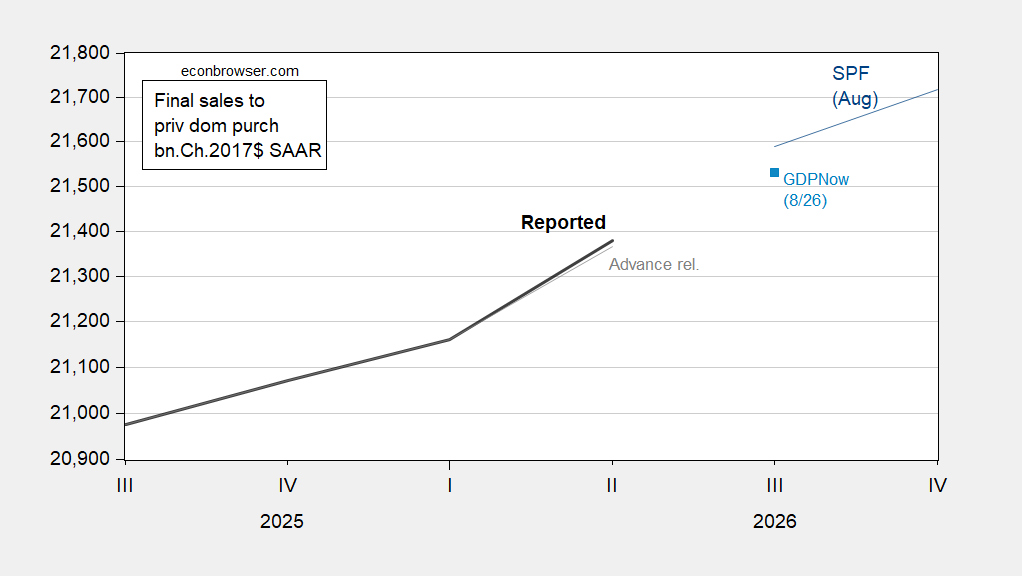
Figure 1: This graph depicts final sales to private domestic purchasers across various releases, providing context for the GDP updates. Source: BEA 2026Q2 2nd release, Atlanta Fed, Philadelphia Fed, and author’s calculations.
Comparative Trends with Previous Quarters
When examining GDP growth projections, looking back at historical data can be insightful. Similar situations have arisen in the past where an initial surge in GDP was followed by a more tempered outlook after a quarter. For instance, back in the post-2008 recovery phase, revisions would often reflect the delicate balancing act of recovering consumer confidence and fluctuating market conditions.
When growth projections appear upbeat initially, as they did with the upward revision to 4.2%, it’s common for analysts to anticipate adjustments in subsequent quarters. In retrospect, such adjustments often align with broader market corrections, changing monetary policies, or external economic shocks. The current shift could be part of this pattern, reflecting the uncertainty embedded within economic forecasting.
Future Outlook and Significance
The future of GDP growth hinges on multiple variables that could sway these current projections. Should inflation persist or the Fed continues its course of tightening monetary policy, achieving higher growth rates might require extraordinary resilience from both consumers and businesses. Moreover, global economic conditions could extenuate local challenges, especially as geopolitical uncertainties loom large. The interconnectedness of the global marketplace can dramatically influence domestic growth prospects. Supply chain bottlenecks, ongoing war economics, and emerging markets can have ripple effects that complicate grassroots economic stability.
And this is the part most people overlook: effective policy-making and strategic business decisions often take time to reflect in the GDP numbers. Moreover, consumer behavior can shift due to sentiments that aren't easily quantified. With fluctuating confidence levels and adaptive consumer habits, projecting the paths ahead becomes more a challenge than a science.
In sum, while the upward revision in core GDP may appear promising at first glance, the subsequent tempered growth projections indicate a far more complex economic environment. Stakeholders must remain vigilant and engaged, as the nuances in GDP revisions provide critical insights into future business and investment strategies. As such, businesses may find themselves needing to adapt quickly, especially in anticipating consumer shifts influenced by external economic pressures.
Discussion
Sign in to join the discussion.