Current State of Non-QM Market
Non-QM (Qualified Mortgage) residential mortgage-backed securities have reached an impressive $78 billion, fueled by lenders adjusting their underwriting criteria to attract a growing number of borrowers who remain underserved. This increase comes despite total impairments reaching 6.27%, marking the tenth rise in the last thirteen months, according to data analysis from dv01. The sustained growth in non-QM securities suggests a market responding to real needs, but this shift is also a reflection of broader economic pressures impacting traditional lending practices.
Shifting Underwriting Practices
The landscape for non-QM securitizations is expanding, both in variety of offerings and overall volume. Notably, Carrington Mortgage Services has recently modified its guidelines to include acceptance of FICO scores as low as 550 for specific alternative documentation loans. If you're working in this space, you likely recognize that such moves reflect a growing urgency among lenders to tap into previously overlooked market segments. Eric Bernstein, president and co-founder of LendFriend Mortgage, points to this adjustment as indicative of a broader trend where mortgage originators are recognizing an increasing demand for products that fully reflect borrowers' financial situations.
Bernstein explains that, "Bank statement loans and asset depletion products have transitioned from niche offerings to essential components of the current purchase market." This shift signifies that lenders are not ignoring risk but are instead adapting to meet the diverse financial realities of borrowers. That's a more proactive approach than we’ve seen historically and suggests lenders may be learning from past restrictive practices that often led to missed opportunities. Having a wider set of products allows lenders to create tailored solutions for applicants who, due to unique circumstances, have difficulty fitting into conventional molds.
Understanding Impairments and Delinquencies
However, the impact of these expanded underwriting practices on loan performance remains uncertain. Month-to-month data suggests a negative trend for distressed mortgages, with most recent increases in impairments. For instance, 90-day delinquencies jumped by 21 basis points to 3.6%. That number raises eyebrows, particularly as new loan impairments also saw a slight increase. This scenario paints a picture of a market where optimism about inclusivity must be counterbalanced by a keen awareness of potential pitfalls.
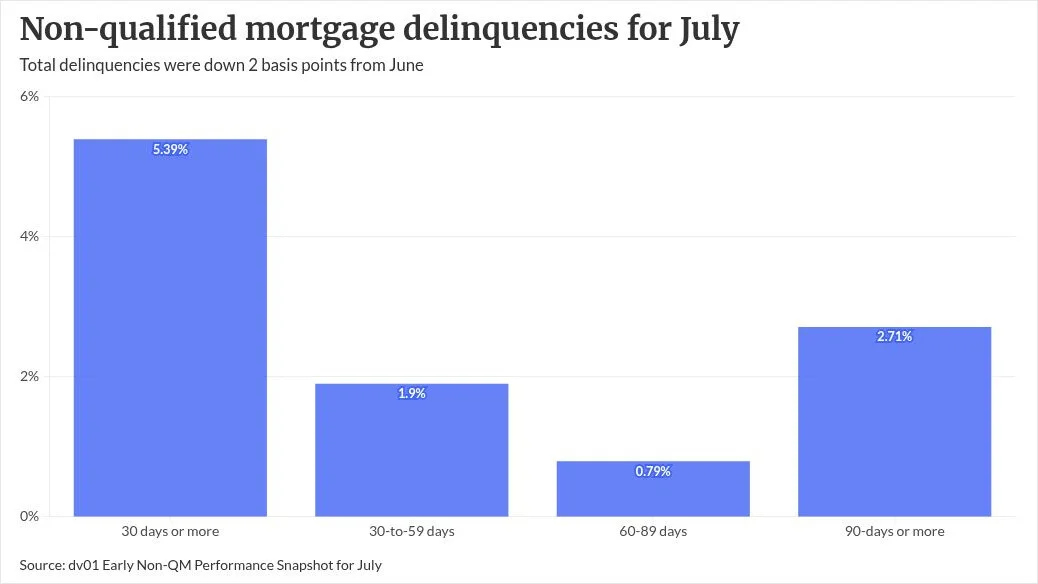
Interestingly, the overall rate of delinquencies dipped by 2 basis points to 5.39%. This decline was largely due to a drop in loans categorized between 30-to-59 days delinquent. It appears that while some segments are struggling, others have shown resilience or slight improvement. For example, the cure rate, which measures the percentage of delinquent loans that successfully return to current status, notably rose by 1.29 percentage points to 24.22% in July. This mixed bag is part of the challenge—there's promise in certain areas, but dark clouds are gathering in others. (and this is the part most people overlook) Understanding this variance is key to navigating the coming months.
Lender Caution and Market Sentiment
The upward fluctuations in impairments could set the stage for a more cautious approach from lenders. For instance, first-time delinquent loans rose marginally, raising questions about the long-term health of the non-QM segment. According to dv01's data governance, while the conditional prepayment rate for non-QM loans remained relatively stable, the shift in deleveraging trends must be monitored closely. It's a fine line to walk; lenders want to grow their portfolios, yet they must also safeguard against rising default risks. The environment demands vigilance without stifling growth opportunities.
Future Outlook for Non-QM Securities
Looking ahead, the non-agency RMBS market is expected to see continued growth, heavily driven by sectors such as non-QM, jumbo loans, and home equity lines of credit. Analysts suggest that this growth could help to offset some of the caution surrounding impairments. Bank of America Securities recently commented on this trajectory, highlighting that increasing capital will likely flow into these smaller sectors, further boosting demand through the remainder of the year. The influx of capital suggests a belief in the underlying demand for these products, indicating that, regardless of current challenges, there’s an appetite for risk in the right contexts.
Amid the rising impairments, the overall perception of the non-QM market staying buoyant suggests a complex yet optimistic outlook. There’s a tension at play—while some signs point to potential instability, others offer encouragement that the market is evolving. It’s crucial for stakeholders to remain vigilant and adaptable in tackling the evolving challenges within this segment. As non-QM products gain traction, the question remains: will the industry strike the right balance between expansion and risk management? The outcome will shape the future dynamics of the mortgage market in notable ways.
Discussion
Sign in to join the discussion.