A five-year, A$28 million effort will alter water access across 7,500 square kilometres to protect Pilbara wildlife and mining interests.
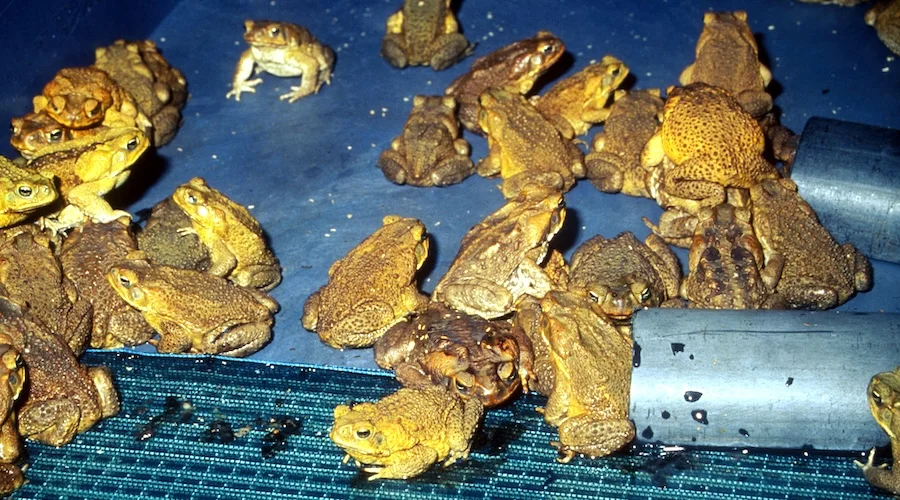
A proposed cane toad barrier in Western Australia puts biodiversity protection alongside a practical concern for Rio Tinto: the long-term environmental conditions around its Pilbara operations. Rio Tinto and its Rhodes Ridge Joint Venture partners have committed A$28 million (about $20 million) over five years to a plan aimed at stopping the amphibians before they reach the iron ore region.
The project’s central test will be operational. Researchers and landholders plan to modify or contain 685 water infrastructure points across six pastoral stations, creating a 7,500-square-kilometre zone between the Indian Ocean and the Great Sandy Desert, south of Broome. Early work is underway, with the initiative scheduled to begin in 2027.
Blocking access to water
Cane toads need water every few days during the dry season. When natural supplies are limited, cattle and irrigation watering points can sustain them and help extend their range. The containment strategy targets those artificial sources, aiming to make them inaccessible and leave the toads without a route south.
“Most other approaches to invasive species have targeted the animal. This is about adapting the environment to make it uninhabitable for them,” said Tim Dempster, a marine biologist at Deakin University. “If we get it right then we won’t have to touch a toad.”
The planned zone is intended to protect about 27 million hectares of sensitive habitat. Researchers estimate that around 25 native species could be significantly affected if cane toads spread into the region, including the northern quoll and ghost bat. The species has already killed millions of Australian animals, among them snakes, goannas and crocodiles.
Introduced to Queensland in 1935 to control beetles harming sugarcane crops, the South American amphibians did little to curb the pests and spread across northern Australia. Curtin University professor Ben Phillips said they could reach the Pilbara within two decades without intervention. He described the containment zone as a rare chance to halt the spread and protect local wildlife.
The effort draws on decades of research and involves Curtin and Deakin universities, Indigenous landowners, pastoralists, government and industry. Its results will depend on whether the altered water infrastructure can be maintained across a large, remote area.
Why the Pilbara matters to miners
Cane toads don’t threaten iron ore production directly. Their potential impact is on ecosystems that matter to future development: if native wildlife declines, mining companies could face higher environmental compliance costs and more complex development approvals, Dempster warned.
“The Pilbara is the heartland for Rio so it’s the right thing to do, but it’s an important thing to do for their business as well,” he said. For Rio, whose extensive iron ore operations are concentrated in the region, the project links habitat protection with the environmental conditions surrounding its core business.
The initiative also has a cultural dimension. Cane toads can reduce populations of native animals traditionally hunted for food, or bush tucker. Goannas, for example, can die after eating the poisonous amphibians. Nyangumarta ranger and Traditional Owner Roberta Hunter said: “Cane toads destroy the water and animals. When toads come close to our Country, we want to be there to stop them because we don’t want the Country to be destroyed.”
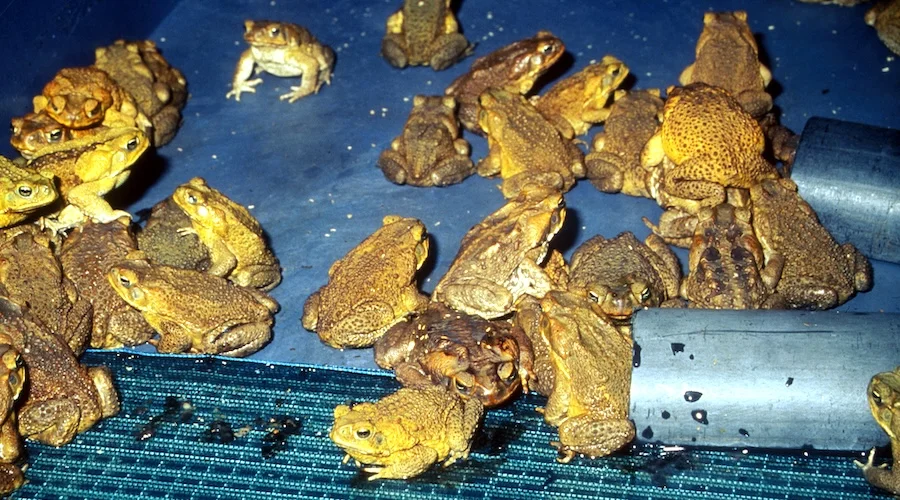
Rio Tinto holds 50% of the Rhodes Ridge Joint Venture. Japan’s Mitsui owns 40%, and AMB Holdings holds the remaining 10%; the five-year funding is split equally between Rio and the joint venture. Rio’s participation comes six years after the company faced international condemnation over the destruction of two 46,000-year-old rock shelters at Juukan Gorge. Then-CEO Jean-Sébastien Jacques later apologized to the Puutu Kunti Kurrama and Pinikura people and told Australian lawmakers the destruction should not have occurred.
Rio Tinto managing director of Pilbara rail, port and services Chris Osborn said the company is working to protect regional biodiversity through its environmental strategy. Western Australia Environment Minister Matthew Swinbourn called the project an example of industry and science working together and said keeping cane toads out would benefit native wildlife.
The approach’s wider value will turn on whether restricting water access can hold the line over time. If the barrier works, it could provide a practical model for managing invasive species by removing the resources that support their spread.
Discussion
Sign in to join the discussion.