Chairman Bernardo Fontaine says Codelco needs joint ventures with private miners to reverse falling output, even as a $32 billion investment push and inflated production figures weigh on the company.
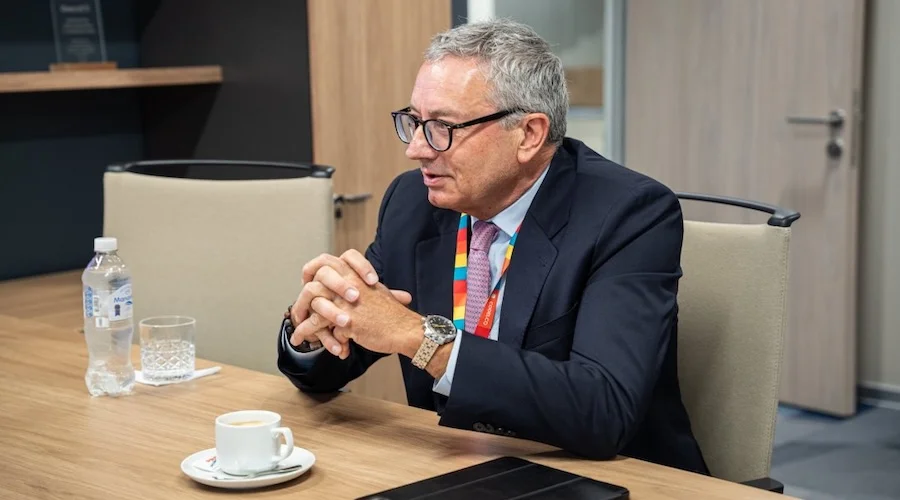
Codelco's chairman is conceding that the state copper miner can't fix its production problem on its own. Bernardo Fontaine told Chilean broadcaster Radio Duna on Monday that extensive partnerships with private miners are the only realistic way to reverse a slide that has continued despite heavy spending. For the world's largest copper producer, that's a significant admission. Chairmen don't usually arrive at that conclusion in public, especially for a company this central to Chile's economy. Here's the thing: it suggests the internal options have run out, at least in his assessment, and that's a much bigger problem than a bad quarter or a delayed mine.
The numbers don't add up well. Codelco invested $32 billion over the past eight years, yet annual production fell from 1.7 million tonnes to 1.2 million tonnes. Fontaine said company reports show costs running 78% higher than at comparable mining operations. Output hit record lows in 2022 and 2023, and project delays, fatal accidents and declining ore grades have kept the recovery stalled. Spread evenly, that spending works out to roughly $4 billion a year, and a drop of close to 30% in output is hard to square with that scale. Money alone didn't buy production here, and anyone watching how the state spends its capital should find that uncomfortable.
Production figures that didn't hold up
Perhaps the most damaging finding is that the reported numbers themselves were unreliable. An internal audit, which Fontaine requested after taking office, uncovered 42,100 tonnes of inflated production figures. That could translate into a $140 million accounting adjustment. A company can explain away a bad year. It's much harder to explain away a number that was wrong to begin with. When the baseline itself is in question, every forecast built on top of it inherits the problem, which is why older production claims deserve more skepticism than their headlines probably suggested.
Investigators identified three mechanisms used to inflate output across several divisions. "Through three mechanisms, production at several divisions was falsely inflated," Fontaine said. "Certain responsibilities were established, and a number of executives involved in the different ways of manipulating production left the company. We are continuing to investigate."
Three mechanisms spread across several divisions isn't one rogue spreadsheet. That's a pattern, and patterns usually point to incentives. In operations like this, when targets or pay hang on a production figure, that figure tends to get managed, and the people closest to the numbers are often the ones best placed to bend them. (And this is the part most people overlook: the reporting problem and the operating problem can feed each other, because a company that believes its own inflated output will make bad decisions about where to spend.) The investigation is still open, so the full picture isn't in yet.
The findings have triggered management changes and a rethink of the operating outlook. Fontaine acknowledged that earlier forecasts were far too rosy and didn't reflect what the company can actually run. "This company is not capable of producing what had previously been discussed," he said. "All the projections were enormously optimistic, and Codelco is facing a crisis in its results and management."
Admitting the old forecasts were wrong is the easy part. The harder part is that any new forecast is only as good as the audit behind it. If the baseline was inflated, resetting expectations downward is a start, not a finish line. Still, a leader who concedes this much isn't pretending the problem is smaller than it is, and that candor is worth more than a polished recovery story would have been.
A governance problem, not just an operating one
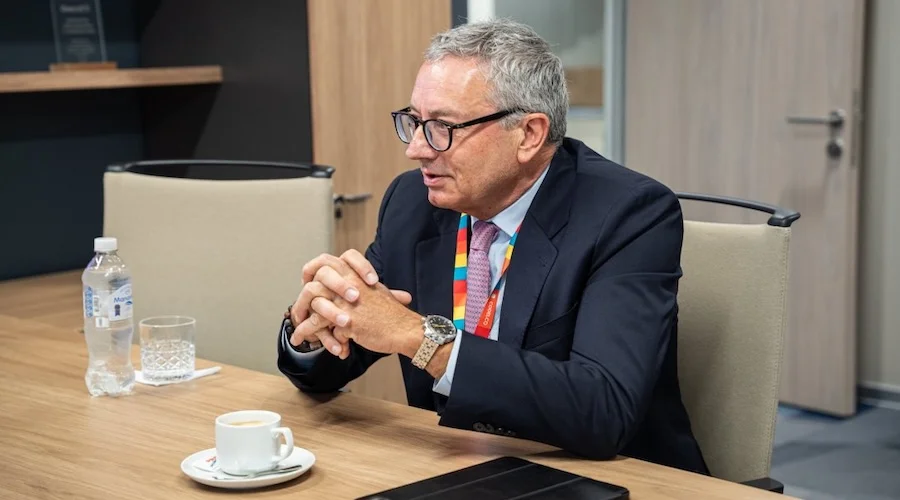
Fontaine pinned much of the blame on governance. He argued that successive administrations didn't provide adequate oversight of the state-owned miner, and that the structure itself is part of the issue. That's a convenient place to put blame, but he has a point. A miner that answers to commercial targets and political priorities at the same time tends to get pulled in two directions. Governments can set priorities, appoint boards, and approve or block major spending, and the effects of those choices pile up over years. The source doesn't say whether oversight was too weak or too intrusive. His answer is clear enough, though: too little ownership, not too much.
"There is a structural problem here, linked to this mixture of a state service and a company," Fontaine said. "The owner, which is the state, has never acted as an owner. For example, it allowed Codelco to take on debt."
Taking on debt is a decision the owner can permit or prevent, and that's what makes the example so pointed. It also moves some of the responsibility away from management, which suits a chairman making the case for change but doesn't tell the whole story. Both things can be true. The company's managers made choices, and the owner shaped the conditions in which those choices were made.
That's a pointed critique, and it matters for a practical reason. The company is already carrying rising costs and mounting debt, and its room to invest is constrained. Those pressures feed each other. Higher costs squeeze cash, tighter cash limits maintenance and new projects, and delayed projects keep output flat while costs keep climbing. Breaking that loop is hard when the owner's own rules shape how the company can borrow and spend, and nobody in the source suggests the problem fixes itself.
Why partners look unavoidable
Codelco holds a million hectares of mining concessions that remain unexploited. Fontaine's core argument is that the company lacks both the management capacity and the capital to develop them alone, so joint ventures are the most viable path to stabilizing output. A million hectares sounds like an asset, and in a sense it is. But land you can't develop is a liability in disguise, because you're paying to hold a resource you can't turn into tonnes. Ventures like this typically bring in outside capital and operating know-how, which is exactly what Fontaine says is missing. Whether a partner shows up on acceptable terms is another question entirely.
The obstacle is the deal structure itself. Fontaine said legislation governing state-owned enterprises restricts these agreements, and lengthy, complex approval procedures discourage potential investors. Still, Codelco already works with Rio Tinto (ASX, LON: RIO), BHP (ASX, LON: BHP) and Anglo American (LON: AAL), which shows the model can work when the terms are right. That existing list cuts both ways. It proves partnerships are possible, but it also shows the current model works with a handful of large players under specific arrangements, not as a broad expansion. Scaling beyond that means getting through the approval queue Fontaine describes, and that's usually where projects of this kind slow down.
Fontaine wants more of that. Expanding the model would let Codelco tap outside capital and technical expertise without developing every project itself. "That is the only way it can grow, or even maintain, its production levels in the future," he said. That's a strong claim, and it comes from inside the company, so it deserves some skepticism. Partnerships may well be the only option. They may also simply be the option the current legal structure allows, which is a different thing.
The new team has set a more conservative bar of about 1.3 million tonnes of annual production. "We will make every effort to achieve average annual production of around 1.3 million tonnes," Fontaine said. That target sits only about 100,000 tonnes above the 1.2 million tonne level he cited, so "modest" is the right word for it on paper. It's a bet that the decline can be stopped, not that the company can return to the 1.7 million tonnes it produced before. Promising a recovery is easier than delivering one, and projects that take years to approve won't help a near-term number much. The harder question is whether the partnerships can be approved and built quickly enough to close that gap.
What this means from here
If you're working in this space, whether as a supplier, a rival, or a potential partner, the message is simple: Codelco is looking outward, and that changes the negotiating dynamic. This is more significant than it looks. A state copper champion publicly saying it can't do the job alone reframes the whole discussion about Chile's largest producer. Companies that have shifted toward joint ventures in similar circumstances typically trade some control for speed and capital, and that trade-off is what Codelco will have to weigh. The company's own statements don't say how it will handle that trade.
The bigger risk is timing. Nothing in the source gives a timeline for approvals, legislative changes or new deals, and I'd be guessing if I offered one. What the source does provide is a clear diagnosis from the people running the company: the production baseline was unreliable, costs are high, the owner's role has been questioned, and the company can't develop its own land without help. Slow. Expensive. Familiar. Those are the words that tend to describe state-led projects when the approval process is as involved as Fontaine describes, and the next few years will show whether this one breaks the pattern. That's the part to watch.
Discussion
Sign in to join the discussion.